Three and a Half Years Later – 100 pounds weight maintenance


Introduction

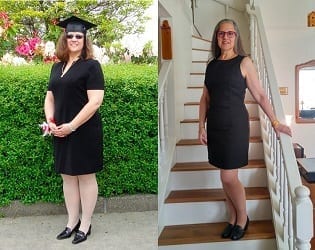
J at start of journey“In October 2019, I began my food addiction recovery and weight loss journey with Joy, and after recently rereading the post that I wrote for her website in May 2021, I was overwhelmed with gratitude.”


Maintaining Recovery and Weight Loss

J in 2024
“J” in 2024

“I continue to be in remission of food addiction and disordered eating and have maintained a weight loss of well over 100 pounds. As well, improvements in the symptoms of both depression and ADHD have been sustained.

In order to remain in remission, I avoid foods that are addictive for me, including all sugar and flour products. I have found it important to eliminate all “cheat days” so that I do not return to my addiction. Each day, I eat nutritious, satisfying, and enjoyable food based on the Meal Plan that Joy designed for me, and updated as my weight normalized.

A decade ago, I could never have imagined eating this way. I can honestly say that my favourite foods are steak, squash, and Brussels sprouts with butter. I have no desire to return to eating the sugary and processed foods that I binged on in the past.”

Navigating New Health Challenges

“Joy has been an invaluable support on my health journey. She is incredibly thorough, knowledgeable, and caring. I recently returned to work with Joy due to some health concerns I had been facing and she advocated for me to return to my doctor to undergo more comprehensive thyroid testing. Finally, after many years of confusing symptoms and doctors’ appointments, I was diagnosed with hypothyroidism.

Once I was diagnosed, Joy adjusted and tailored my Meal Plan to my hypothyroidism and history of obesity and food addiction. I am very grateful for Joy’s knowledge and insight. I truly have been profoundly blessed.

One of the most important first steps I took in 2019 was reaching out to Joy, as well as to a clinical counselor, and a food addiction support group. I hope my story continues to provide hope to anyone who is wondering if it is possible to be free from their addiction to food.”

~J.H., October 10, 2024

 
Nutrition is BetterByDesign
 

Privacy Policy | Terms of Use


© 2025 BetterByDesign Nutrition Ltd.

LEGAL NOTICE: The contents of this blog, including text, images, and cited statistics, are for informational purposes only. The content is not intended to be a substitute for professional medical advice, diagnosis, or treatment. Always seek the advice of your physician or other qualified health provider with any questions you may have regarding a medical condition. Never disregard professional medical advice or delay in seeking it because of something you have read in this content.

The Death of Peers and Parents Should Change the Way We Live

Introduction

Last week, I flew to Montreal to be with my mom in the last days before her death. While it was hard to see how much she had changed, it was sobering to be reminded of something I started to realize six years ago — that the death of friends and family should change the way we live.

The untimely death of two college friends in 2017 was the impetus for me to finally change my own diet and lifestyle. One of my friends died of a stroke and the other of a massive heart attack; both worked in healthcare their entire lives. As mentioned several times in “A Dietitian’s Journey,” I knew that my death would be next if I didn’t lose weight and lower my very high blood pressure and blood sugar.

My Journey Toward Remission

While it took me twice as long as it should have to accomplish my health and weight goals due to undiagnosed hypothyroidism, I was successful in losing 55 pounds and taking a foot off my waist, and in putting my hypertension and type 2 diabetes into remission. Many times I was asked why I took accomplishing my goal so seriously, and my reply was always the same: “I am doing this as if my life depends on it, because it does.”

When my dad was diagnosed with Alzheimer’s disease, I once again made some lifestyle changes. Even though I had put my type 2 diabetes into remission with diet, I began taking a low dose of the prescription medication Metformin preventatively, while continuing to eat a low-carb diet. But, like many people, I became somewhat complacent and maybe even a little bit smug that diet alone was enough. In the years since my dad’s death, I ended up discontinuing my medication with my doctor’s knowledge.

Something that I was missing in my decision to discontinue this medication was that my health had changed, and I didn’t know it yet.

The Impact of Hypothyroidism

When I was diagnosed with profound hypothyroidism a little over a year ago, my doctor told me that even with thyroid hormone replacement medication, it would take a year and a half to fully recover due to how advanced it was. I wanted to understand how my body had changed, so I turned to scientific literature and learned how hypothyroidism affected my heart rate, blood pressure, and cholesterol, writing about it here.

For a while, I took a “baby dose” of blood pressure medication and made hypothyroid-specific dietary changes, but eventually stopped taking it, waiting for the thyroid medication to reverse the symptoms. In retrospect, that was naive. I assumed metabolic markers would return to normal simply by waiting for recovery. Recently, after an increase in thyroid medication, I noticed my blood sugar was significantly higher than it had been in years, despite being compliant with my low-carb diet. I discovered that thyroid hormone replacement — even “natural” versions — can raise blood sugar, which I discussed here.

Facing Family History

Around the time my dad was diagnosed with Alzheimer’s, my mom was diagnosed with vascular dementia secondary to mild strokes (TIAs). At first, the signs were subtle—difficulty organizing lists—but over time, she lost the ability to read and write. My mom didn’t have high blood pressure but struggled her whole life with weight and a sedentary lifestyle.

The critical factor I wasn’t previously accounting for was the combined risk: my mom’s history of TIAs and vascular dementia combined with my current hypertension from thyroid disease, and my dad’s type 2 diabetes and Alzheimer’s history while my own blood sugar was rising. It is great to eat low carb and work out at the gym, but in light of these changes, taking Metformin and blood pressure medication only makes sense.

While in Montreal, I made a phone appointment with my doctor. We discussed my mother’s diagnosis and my current vitals. He agreed that resuming medication to monitor these levels regularly was the appropriate path.

Moving Forward Without Complacency

My mom's grave, beside my dad'sToday I buried my mom. While she died due to pneumonia and not vascular dementia, her death has changed how I will live. I realize that I can no longer be complacent and assume that eating a good diet and going to the gym several days a week is always “enough.”

Joy's parents' resting placeMy dad is buried beside my mom, and visiting his grave reminded me that his death was related to Alzheimer’s and 40 years of type 2 diabetes. While my current elevated blood sugar is a side effect of necessary thyroid medication, using all tools available—medication, diet, and exercise—is the logical choice to prevent a similar fate. His death, too, has changed how I will live.

Final Thoughts

Dietary and lifestyle changes are powerful and can effectively put both type 2 diabetes and hypertension into remission. However, when circumstances change, it is necessary to consider medication as an adjunct. I have no choice but to be on thyroid medication, just as someone with type 1 diabetes must take insulin. Given the side effects of those hormones and my genetic risk factors, I have chosen to let my parents’ deaths change my approach.

Taking medication is not a “failure.” Dying an unnecessary or premature death is. If taking medication, in addition to being active and eating well, helps avoid or significantly slow dementia, that is the best path forward.

To your good health,

Joy

You can follow me on:

Twitter: https://twitter.com/jyerdile
Facebook: https://www.facebook.com/BetterByDesignNutrition/

Nutrition is BetterByDesign

Privacy Policy | Terms of Use

© 2025 BetterByDesign Nutrition Ltd.

LEGAL NOTICE: The contents of this blog, including text, images, and cited statistics, are for informational purposes only. The content is not intended to be a substitute for professional medical advice, diagnosis, or treatment. Always seek the advice of your physician or other qualified health provider with any questions you may have regarding a medical condition. Never disregard professional medical advice or delay in seeking it because of something you have read in this content.

Success is All About “Showing Up”

Introduction

Whether it’s achieving significant weight loss or recovering one’s health, I believe that success is all about “showing up”. As much as people would like to believe that eating certain foods or taking supplements will cause the “pounds to melt away” or for the symptoms of a health condition to “improve in just 6 weeks,” we know better. Success requires making a commitment, consistency and “showing up” for yourself — if not every time, most times.

One of the first posts I made when I started my personal weight-loss and health-recovery story (March 5, 2017 – March 4, 2019) was a video of me walking around a track. I was so overweight and out of shape that I could barely walk and talk at the same time. I was clearly out of breath! So why on earth did I post it? Why didn’t I wait until I lost the 55 pounds and the foot off my waist and then post my success pictures? I believe that people relate to the struggle of watching someone doing it and that watching them succeed no matter how long it takes, gives them hope that they can, too!

Here’s a clip from that video;

What I said in that video still rings true today, as I am continuing to work towards recovering from severe hypothyroidism;

“I want to encourage people that if they make a commitment to “do it” just do it! If you have to re-schedule other things to do it, just do it! It’s important. Exercise is a small component of this journey, but it is an important component. “

It’s about “showing up”.

Joy before and after losing 55 poundsBy setting goals and by being intentional about following through, I went from looking like the photo on the left to being able to hike intermediate trails, and looking like the photo on the right. By “showing up” for myself in terms of my eating, I was able to put my extremely high blood pressure and type 2 diabetes into remission. But losing 55 pounds and a foot off my waist didn’t happen overnight. Even though I am a Dietitian and have helped many others achieve this in far less time, as my doctor told me a year ago, there indications that I probably had subclinical hypothyroidism for the past 10 years. In a sense, that I was able to accomplish the weight loss and for the most part maintain it, is evidence to the power of “showing up.”

Achieving and maintaining a healthy body weight has really about me making decisions on a consistent basis that move me towards that goal.

It’s not about being “perfect,” but about being consistent.

It’s about “showing up” for myself when I plan my meals. It’s about prioritizing foods that will provide satiety (not feeling hungry), and ensuring that the foods I eat with them provide me with the nutrients I need, while supporting my ongoing metabolic health.

Setbacks are About “Showing Up”

Weight loss and health recovery rarely occur in a straight line. There are any number of setbacks that can, and do occur. It is what we do with setbacks that determines whether we regain all the weight we lost and then some, or becomes as sick or sicker than we used to be.

It is still about “showing up”.

Joy after losing 55 pounds, then being diagnosed with profound hypothyroidismAt my youngest son’s wedding last June, I was at my sickest but didn’t yet have a diagnosis. I could barely walk or get up from a chair because of the edema in my legs, and my tongue was so swollen that it was difficult to talk. You can read more about that in this first post in this new series.

What made it really hard for me was that I looked like I did when I was 55 pounds heavier, but I wasn’t. In short, I looked like a “failure.”

Recovery from Hypothyroidism is About “Showing Up”

I wrote a few posts about my recovery from hypothyroidism under “A Dietitian’s Journey (Part II)” but there were a lot of “silent” periods in between those posts, and since the last one where I simply had to “show up.”

I needed to continue to take my thyroid meds and have my thyroid hormones checked every few months. I needed to continue to work with my doctor to get my medication adjusted to a level that enabled me to feel well, and to accomplish what I needed to. I am very thankful to have an incredibly knowledgeable and supportive doctor, but the bottom line is that I need to consistently “show up.”

I needed to prepare my meds each evening for the following days dosages I take them in — and it didn’t matter if I was tired.

I had to continue to “show up” for myself when it came to making decisions as to which foods I will eat and those I choose not to because I have Hashimoto’s disease, which is an autoimmune condition.

I needed to continue to “show up” for myself to get tested for nutrients of importance in hypothyroidism and to supplement accordingly. Except for vitamin D3 and K2, and later magnesium, I never took supplements — choosing instead to get them by eating a range of real, whole foods. Being diagnosed with an autoimmune condition necessitated me changing my mind on this and consistently “showing up” for myself by consistently taking the supplements that I needed to.

Every day with hypothyroidism is about “showing up.”

Restoring Health is About “Showing Up”

A few weeks ago, after my new thyroid medications took effect and it became possible to think about regaining my mobility and muscle mass, the question was “how.”

My son who had been my “hiking buddy” recently married and moved out of province, and I was very aware that I wasn’t ready to re-join the ladies hiking group that I am a member of without regaining my strength. I needed a plan.

Someone in the local Facebook group posted about a program available and I knew that was exactly what I needed. It was close and would give me access to the weight-training facilities that I needed to rebuild my muscles, and the classes would provide me with some fun and aerobic exercise at the same time. They even had several pools where I could to rekindle my love of swimming, after I replaced my size 16 bathing suit.

Gym bag - getting ready to goIn order to “show up” I had to first get what I needed.

By the end last weekend, I had a 3-month renewable membership to the fitness center, a one year parking pass, a new gym bag, and a bathing suit in my size. While I wondered if I would even remember how to swim as it had been at least 30 years since I last did, I was going to be focusing on doing what I needed to do to rebuild my muscle mass, and that was to “eat sufficient protein at each of my meals” and to “lift, push and pull heavy things often“.

Joy back at the gymI planned to go to the gym for the first time this past Wednesday, but make sure there was nothing slowing me down to “showing up”, my gym bag was already packed, and by the front door.

My gym socks and training shoes were pulled out, and my sweat band was draped on top of them.

My driver’s license, debit card and health card were already in a small wallet attached to my keys and was laying on top of my gym bag.

My water bottle was ready to go, and I had the coins needed for the lockers.

I had no excuses.

As I grabbed my bag and water bottle, I was “ready” to “show up” for myself. I needed to, because there was no one there to coax or encourage me. I had to be there for “me” and I was.

During my first workout, I learned how to use one of the types resistance machines and did three reps of ten with a 45 second rest in between each set on most of them — or as much as I could. I focused on having good form and didn’t try to do more than my body was able to do. This was the first workout, and I was already successful because I “showed up”. Everything else I did was moving me towards my goal of getting in good enough shape to hike again.

Yesterday, I woke up quite sore — especially my pecs. These are not muscles I use much, if at all. I had thought I might go swimming, but I was so sore I wasn’t sure that was such a good idea since it had been way too long since I last did it. I stretched my muscles and rested and prepared my gym bag to go on Friday.

Joy still at it - going to the gymWhen I awoke today, everything was prepared. The only thing I grabbed was a mask because of the smoke warning outside, and headed to the gym.

I had already determined I would do what I could, given I am new at it and still somewhat sore from Wednesday, and had a good workout. I was surprised that I could increase weight or reps on some machines but definitely did less on the pec press. That’s okay. I “showed up.”

Final Thoughts…

Whether it is losing significant weight, restoring one’s metabolic health, or rebuilding one’s physical strength after an illness, the first thing that is necessary is to make a commitment to “do it”.

Then, put the pieces in place that are required to be successful. If that is weight loss or health recovery, have a plan of how you are going to do it and who will oversee your progress. If it’s rebuilding your strength after an illness, find something that you want to do, that’s realistic for you to consistently do, and then get whatever is needed to get started.

Then, as I said in the video above, once you’ve made the commitment to “do it,” just do it.

If you are consistent in “showing up” for yourself on a regular basis, you will be successful in achieving your goals.

To your good health,

Joy

You can follow me on:

Twitter/X: https://twitter.com/jyerdile
Facebook: https://www.facebook.com/BetterByDesignNutrition/

 
Nutrition is BetterByDesign
 

Privacy Policy | Terms of Use


© 2025 BetterByDesign Nutrition Ltd. All rights reserved.

 
LEGAL NOTICE: The contents of this blog, including text, images, and cited statistics, are for informational purposes only. The content is not intended to be a substitute for professional medical advice, diagnosis, or treatment. Always seek the advice of your physician or other qualified health provider with any questions you may have regarding a medical condition. Never disregard professional medical advice or delay in seeking it because of something you have read in this content.

A Dietitian’s Journey (Part III) – the next phase

Introduction

Thirteen months ago, I was diagnosed with an auto-immune condition and was the sickest I had been in many years. Thankfully, I am entering the next phase, where I hope to restore my health to what it was before my diagnosis.

Joy in June 2022 after being diagnosed with profound hypothyroidismAt the time of my youngest son’s wedding on June 3, 2022, I was incredibly swollen all over, had pronounced joint pain and muscle aches, and significant edema in my legs and ankles — so much so, that I was wearing compression stockings all the time, even at the wedding.

The skin on my cheeks was dry and flaky and despite trying multiple types of intense moisturizers, nothing helped. My mouth symptoms had progressed to the point that I found it difficult to say certain words because my tongue was swollen so much that it seemed too large for my mouth, and the salivary glands underneath my tongue were swollen.

The debilitating fatigue made life very difficult.

The muscle weakness had progressed to the point where it was difficult for me to get up from a chair, or to get out of the car without pushing myself up with my hands. My eldest son was helping me get to and from the beach for the photos for the wedding and he thought it was me aging. Even my other two sons began to assume the same thing because the changes occurred too slowly for them to see that they only started a few months ago. I was thinking that I may have some form of “long-Covid,” but what got me starting to think that my symptoms may have had something to do with my thyroid was the very noticeable swelling in my face.

The phase immediately prior to diagnosis was the most difficult because on the occasion of my first son’s wedding, I looked like I did when I was 55 pounds heavier, but wasn’t. What was very stressful was not knowing why I was so sick.

LEFT: March 5, 2017, RIGHT: June 3, 2022 at my youngest son’s wedding.

The First Phase of Recovering from Hypothyroidism

Just as weight loss and metabolic health recovery rarely take place in a straight line, the same is true with recovering from hypothyroidism.

At the end of October 2022, my thyroid hormones had improved significantly taking two types of thyroid medication. My free T3 (the active thyroid hormone) was at 65.5% of the reference range, however my free T4 was only at 41.75%. Unfortunately, the medication adjustment we made at that time to “tweak things” made everything worse. By April, I was exhausted and cold, and found it very difficult to get through the day.

Joy after her 50% hair loss regrewAfter having my thyroid hormones retested, it was evident why I felt awful, as my free T4 and free T3 had both dropped significantly.

Once again, my doctor adjusted my medication and thankfully my symptoms improved within a few weeks. Unfortunately, the less-than-optimal dose of thyroid hormones from January to April triggered another round of excessive hair shedding, but rather than “sweat the small stuff”, mid-June I opted for a new haircut which allowed my natural curls to fall where they may and it helped.

Since my condition is autoimmune, I continue to follow the specific dietary recommendations that I outlined here, as well as supplementing with the nutrients of importance in hypothyroidism while periodically having my serum nutrient levels tested. I also continue to eat a lower carb diet that is high in highly bioavailable protein to support my continued metabolic health.

A Dietitian’s Journey Continues – The Next Phase

While I was feeling much better for the past few weeks I was bemoaning the fact that I was not well enough to resume hiking. I know, “first world problems”. Now that the son that got into hiking with me a few years ago was married and had moved out of town, it was up to me to figure out a way to regain my strength.

Last week, someone on social media posted about a local fitness program and I thought to myself, “I am going to join that“! It was perfect. It was close and would give me access to the weight-training facilities that I needed to rebuild my muscles, as well as classes that would provide me with some fun and aerobic exercise at the same time. They even had several pools where I could to re-discover my age-old love of swimming! Realizing that the last bathing suit I owned was size 16 (from before I lost weight in 2017-2019), it was time to go shopping.

By the end of this past weekend, I already had a 3-month renewable fitness center membership, a one year parking pass, a new gym bag, and a bathing suit in my size. While I wondered to myself if I will even remember how to swim, but that was okay as I was determined to begin with “lifting, pushing and pulling heavy things often“. Along with eating sufficient protein intake over each of my meals, weights and resistance training was the most important for restoring my muscle mass and avoiding sarcopenia (muscle-loss) so common in older adults. I was determined NOT to become one of those frail older people and this program would get me there.

Rebuilding Strength and Mobility

I was planning to start at the gym this past Tuesday but ended up taking one of my sons and daughter-in-laws to the airport. When I woke up on Wednesday morning, I was ready to go. Not only was I ready, but I was excited to go, because for the first time in a year and a half to two years, it was possible. I was finally well enough again.

When I arrived at the fitness room, I asked the trainer to show me how to adjust the machines. She ushered me over to the cardio equipment, while encouraging me that this is where I should start. I replied to her that my first priority is to rebuild lost muscle mass and asked her to please show me how to use the resistance equipment, which she did. While cardio definitely has a place in my long-term goal of being able to hike again, lifting weights and doing resistance training will enable me to rebuild lost muscle, and strengthen joints and connective tissue as well as help with restoring my metabolism and mobilizing residual fat.

Joy at the gym, after being on thyroid hormone replacement

This is me after my first weight training session yesterday. I was sweaty and tired, but it felt amazing to finally be at this next phase of my journey one I have waited for as patiently as possible.

I hope that a Dietitian’s Journey – Part III encourages others who are recovering from Hashimoto’s as well as other types of auto-immune disorders.

If you would like more information about how I can support you in your health journey, please reach out to me through the Contact Me form on the tab above.

To your good health,

Joy

You can follow me on:

Twitter/X: https://twitter.com/jyerdile
Facebook: https://www.facebook.com/BetterByDesignNutrition/

Nutrition is BetterByDesign

Privacy Policy | Terms of Use

© 2025 BetterByDesign Nutrition Ltd. All rights reserved.

LEGAL NOTICE: The contents of this blog, including text, images, and cited statistics, are for informational purposes only. The content is not intended to be a substitute for professional medical advice, diagnosis, or treatment. Always seek the advice of your physician or other qualified health provider with any questions you may have regarding a medical condition. Never disregard professional medical advice or delay in seeking it because of something you have read in this content.

Thyroid Medication can Worsen Blood Sugar Control in People with Diabetes

Introduction

Did you know that thyroid medication can worsen blood sugar? The “highlights of prescribing information” sheets available to pharmacists and doctors for medications such as Synthroid® (generic: levothyroxine) and Cytomel® (generic: liothyronine) warn that both these types of thyroid medication can worsen blood sugar control in diabetics and increase the need for diabetes medications, including insulin. I didn’t know this.

Even though I had been diagnosed with type 2 diabetes more than twelve years ago and with hypothyroidism this past August, when I was prescribed thyroid medication, neither the pharmacist nor my doctor mentioned this potential side effect. He was well aware that for three years prior to my diagnosis of hypothyroidism, I had been in remission of diabetes, controlling my blood sugar through diet alone.

When I began taking thyroid medication, I started to periodically feel unwell, similar to how I felt with high blood sugar. I began to test my blood glucose more often and discovered it was routinely spiking as high as the mid-to-high 10 mmol/L (~190 mg/dl) for seemingly no reason.

Effect of thyroid medication on blood sugar
A blood glucose reading showing an unexpected spike after starting thyroid medication

The Connection Between Thyroid and Glucose

It is essential that people diagnosed with any form of diabetes (type 1, type 2, gestational diabetes) as well as hypothyroidism know that their thyroid medication can impact their blood sugar control. While those with type 1 diabetes monitor their glucose closely, many people with type 2 diabetes rarely check regularly and may miss these significant spikes.

The “Highlights of Prescribing Information” for both Synthroid® and Cytomel® warn that therapeutic use of these medications in patients with diabetes mellitus may worsen glycemic control and result in increased insulin requirements. They recommend carefully monitoring blood sugar after starting, changing, or discontinuing thyroid hormone therapy.

Prescribing Information for Synthroid
Page 1 of the Synthroid prescribing information highlighting warnings for diabetic patients

Understanding the Biological Mechanism

A paper published recently explains how thyroid hormones contribute to a rise in blood glucose. In the liver, thyroid hormones increase the expression of glucose transporter 2 (GLUT2), leading to increases in both gluconeogenesis and glycogenolysis. Additionally, thyroid hormones increase lipolysis in adipose tissue, which further stimulates hepatic gluconeogenesis [7].

Natural Desiccated Thyroid (NDT) Warnings

Even products like Armour Thyroid® or ERFA desiccated thyroid® contain the same warnings in their product monographs. They state that thyroid hormone therapy in patients with concomitant diabetes mellitus aggravates the intensity of symptoms, requiring appropriate adjustments of therapeutic measures.

Product Monograph Erfa Thyroid
Precautions listed in the Erfa Thyroid product monograph regarding diabetes

Final Thoughts…

If you have any type of diabetes and have also been diagnosed with hypothyroidism (including Hashimoto’s disease), it is very important that you monitor your blood glucose regularly. Contact your doctor if you notice a worsening in your blood sugar control to evaluate your need for dosage adjustments or additional medication.

Consider adopting a style of eating lower in carbohydrates. According to a 2019 consensus report from the American Diabetes Association, reducing overall carb intake has “the most evidence for improving glycemia” [3]. However, if you take certain medications, please seek medical oversight before adopting a very low carbohydrate diet.

To your good health!

Joy

You can follow me on:

Twitter: https://twitter.com/jyerdile
Facebook: https://www.facebook.com/BetterByDesignNutrition/

References

  1. U.S. Food and Drug Administration. (2020). Highlights of Prescribing Information for Synthroid (levothyroxine sodium). [https://www.accessdata.fda.gov/drugsatfda_docs/label/2020/021402s034lbl.pdf]
  2. U.S. Food and Drug Administration. (2018). Highlights of Prescribing Information for Cytomel (liothyronine sodium). [https://www.accessdata.fda.gov/drugsatfda_docs/label/2018/010379s054lbl.pdf]
  3. Evert, A. B., et al. (2019). Nutrition Therapy for Adults With Diabetes or Prediabetes: A Consensus Report. Diabetes Care, 42(5), 731-754. [https://doi.org/10.2337/dci19-0014]
  4. AbbVie Inc. (2022). Armour Thyroid (thyroid tablets, USP) Prescribing Information. [https://dailymed.nlm.nih.gov/dailymed/getFile.cfm?setid=56b41079-60db-4256-9695-202b3a65d13d&type=pdf]
  5. ERFA Canada 2012 Inc. (2017). Thyroid (Thyroid Tablets, USP) Product Monograph. [https://pdf.hres.ca/dpd_pm/00034857.PDF]
  6. Talwalkar, P., Deshmukh, V., & Bhole, M. (2019). Prevalence of hypothyroidism in patients with type 2 diabetes mellitus and hypertension in India. Diabetes, Metabolic Syndrome and Obesity, 12, 369-376. [https://doi.org/10.2147/DMSO.S181470]
  7. Eom, Y. S., Wilson, J. R., & Bernet, V. J. (2022). Links between Thyroid Disorders and Glucose Homeostasis. Diabetes & Metabolism Journal, 46(2), 239-256. [https://doi.org/10.4093/dmj.2022.0013]
 
Nutrition is BetterByDesign
 

Privacy Policy | Terms of Use


© 2025 BetterByDesign Nutrition Ltd.

LEGAL NOTICE: The contents of this blog, including text, images, and cited statistics, are for informational purposes only. The content is not intended to be a substitute for professional medical advice, diagnosis, or treatment. Always seek the advice of your physician or other qualified health provider with any questions you may have regarding a medical condition. Never disregard professional medical advice or delay in seeking it because of something you have read in this content. </div

Hypothyroidism Update – six months of treatment since diagnosis

Introduction

This update marks just over six months since I was diagnosed with profound hypothyroidism and began medication and nutritional treatment. It is written from a subjective perspective and thus is categorized as part of my personal story, “A Dietitian’s Journey.”

At the beginning of June 2022, our family was in Tofino for the marriage of my youngest son. The groom’s eldest brother assumed that my inability to walk on the sand for family photos or to get up out of a chair was a result of me having “aged.” He had no idea that I was hiking for several hours at a time just the summer prior.

Hypothyroidism physical changesI knew something was wrong. For several months, I assumed my exhaustion and joint pain were carry-over effects from Covid. But a photo taken just before the wedding told me it had to be something else. Gradually, I went from looking fit after losing 55 pounds to looking like I had regained everything. I later found out it wasn’t fat, but an accumulation of mucin in the skin—a hallmark sign of myxedema. You can read more about those skin changes here.

The Challenge of Diagnosis

Two weeks after the wedding, my doctor confirmed a diagnosis of hypothyroidism. It had actually taken almost a decade to get diagnosed because of the limitations placed on which tests doctors can requisition. There is also the reality that the most common symptoms are often dismissed as “just aging.”

Many believe it is normal for older adults to have body aches, fatigue, constipation, or forgetfulness. These are not typical signs of aging; they are common symptoms of hypothyroidism. Because these symptoms are so non-specific, they often go unaddressed in short medical appointments.

Addressing Hair Loss and Recovery

My diagnosis was just the beginning. Three months later, I lost half my hair due to telogen effluvium, a form of diffuse hair loss that can occur after profound stress or thyroid disorders. When the loss continued due to androgenic alopecia, I began researching nutrients with evidence for restoring hair growth, which I wrote about here.

Six month recovery updateThis past weekend was my second son’s wedding, and the difference is incredible. Instead of medical compression stockings and orthopedic shoes, I wore regular dress pumps. While it will still take time for the mucin to fully resolve, my face and legs no longer look swollen and “inflated.” I felt human again and wasn’t self-conscious in family photos.

Being on the correct dose and mix of thyroid hormones has made a significant difference. My hair is gradually growing back, and I even have eyelashes and eyebrows returning. It is my hope that by the time these newlyweds celebrate their first anniversary, the residual symptoms will be entirely behind me.

Final Thoughts…

If you have wondered if your symptoms are consistent with hypothyroidism, you can download a checklist of signs here to help you have an informed discussion with your doctor.

To your good health!

Joy

You can follow me on:

Twitter/X: https://twitter.com/jyerdile
Facebook: https://www.facebook.com/BetterByDesignNutrition/

 
Nutrition is BetterByDesign
 

Privacy Policy | Terms of Use


© 2025 BetterByDesign Nutrition Ltd. All rights reserved.

 
LEGAL NOTICE: The contents of this blog, including text, images, and cited statistics, are for informational purposes only. The content is not intended to be a substitute for professional medical advice, diagnosis, or treatment. Always seek the advice of your physician or other qualified health provider with any questions you may have regarding a medical condition. Never disregard professional medical advice or delay in seeking it because of something you have read in this content.

Alopecia Universalis – a clinician’s personal story of complete hair loss

Introduction

Three years ago, Tim Rees, a clinician from Germany, lost all his hair a second time to alopecia universalis (AU). As a registered clinical nutritionist, he felt he had lost his credibility to help others with autoimmune conditions, and when he expressed those feelings in a recent blog, it struck a chord with me.

Tim Rees
Tim Rees with his son in 2022

“All my hair fell out, but it was my response to it that destroyed me. You could be forgiven for thinking this is all centered around vanity, but the thing that crushed me was that it made me feel like a fraud.” — Tim Rees, registered clinical nutritionist.

As a clinician, I felt similarly when I lost half my hair in September of 2022. I wondered if others would consider me a “failure” for not having been able to prevent it. What makes a clinician knowledgeable is their training and ongoing study, and I do not believe that a clinician diagnosed with an autoimmune disorder or metabolic disease is disqualified from being able to help others. On the contrary, provided they remain objective, a clinician’s ability to understand their clients’ struggles from “both sides of the desk” may be an asset.

Alopecia Universalis

Alopecia universalis (AU) is an advanced form of alopecia areata (AA), which is a condition that causes round patches of hair loss. In alopecia universalis, there is a complete loss of hair on the scalp and all over the body. It is an autoimmune condition in which the immune system mistakenly attacks the hair follicles [1].

[Image illustrating the difference between Alopecia Areata and Alopecia Universalis]

A Clinician’s Personal Story

Below is an excerpt of Tim’s story, shared with permission from his blog:

“Three years ago my hair started falling out for the second time. My immune system killed my hair follicles and the hair dropped away like oak leaves in autumn. Alopecia Universalis, not a single hair remained on or in my body.”

“The thing that crushed me was that it made me feel like a fraud. Alopecia, one of the most visible autoimmune diseases one can have, undermined my work and, I thought, my credibility as a nutritionist helping people with autoimmune conditions. But that’s not true. I’ve done amazing things with nutrition for myself and my clients.”

“This year will be different. I’m plastering this all over social media. Firstly, it’s a part of my acceptance. You must accept how things are today in order to make a difference tomorrow. Secondly, it’ll help to keep me motivated and compliant for however long it takes to allow my body to heal.”

The Path to Restoration

Tim plans to use an exclusion diet as well as nutritional supplements to support his recovery. He also intends to integrate other approaches including the use of sauna, cold thermogenesis, exercise, and circadian rhythm optimization. I applaud Tim’s boldness in stopping “hiding” and living his journey in a public way. I wish him the very best in achieving his goal.

Final Thoughts…

It is important to keep in mind that what may work for Tim may not work for others diagnosed with the same condition. I previously wrote two referenced articles related to nutrient supplementation and hair loss, Nutrients of Importance and Supplements with Evidence to Restore Hair Loss.

Since taking nutritional supplements is not without risk, I would encourage anyone considering this to first consult with a qualified healthcare professional to determine which nutrients may be low or deficient based on lab work.

To your good health!

Joy

You can follow me on:

Twitter: https://twitter.com/jyerdile
Facebook: https://www.facebook.com/BetterByDesignNutrition/

References

  1. National Institutes of Health (NIH). (2023). Alopecia Universalis. Genetic and Rare Diseases Information Center. [https://rarediseases.info.nih.gov/diseases/614/alopecia-universalis]
Nutrition is BetterByDesign

Privacy Policy | Terms of Use

© 2025 BetterByDesign Nutrition Ltd.

LEGAL NOTICE: The contents of this blog, including text, images, and cited statistics, are for informational purposes only. The content is not intended to be a substitute for professional medical advice, diagnosis, or treatment. Always seek the advice of your physician or other qualified health provider with any questions you may have regarding a medical condition. Never disregard professional medical advice or delay in seeking it because of something you have read in this content.

Hair Loss in Hypothyroidism – nutrients of importance

Introduction

The previous article titled “Hair Loss – Root Causes” was about the three most common types of hair loss, including androgenic alopecia, alopecia areata, and the most common form of diffuse hair loss, telogen effluvium, which is the type often associated with hypothyroidism. This article explains the role of specific vitamin and mineral deficiencies in hair loss and how treating them can help restore hair growth.

As explained in a previous article, telogen effluvium (TE) is the most common form of hair loss in hypothyroidism and is where the hair often comes out in clumps in the shower or a brush. Hair loss is usually from all over the scalp but may occur more on the temples, the part, and the crown of the head [1]. In a study of more than 1200 people with thyroid disorder, half (50%) of people aged 40 years old and older had either alopecia areata, or androgenetic alopecia [2].

What makes the hair loss associated with thyroid dysfunction particularly challenging is that it occurs 2-3 months after the overt symptoms of thyroid disorder began, which is usually once they’ve already begun thyroid hormone treatment for hypothyroidism.

The pictures below are of me and are provided for illustrative purposes only. The one on the left was taken at one of my son’s wedding in June 2022, just prior to being diagnosed with profound hypothyroidism. The photo on the right was taken three months later, after beginning hormone replacement treatment, and the hair loss and shiny scalp is very apparent.

Comparison of hair loss before and after hypothyroidism diagnosis
No hair loss at height of untreated hypothyroidism, telogen effluvium hair loss 3 months later

Hair loss in hypothyroidism

Normally, 90-95% of hair follicles are in the growth (anagen) phase, with only 5–10% being in the resting (telogen) phase. Only a few follicles are in the transitional (catagen) phase [1] at any one time. At the end of the telogen phase, the hair falls out and under normal circumstances that would amount to ~100-150 hairs per day.

The cycle of human hair growth
Hair growth stages

In telogen effluvium, the growth phase slows down and up to 50% of the follicles move into the telogen phase, where shedding occurs. As can be seen in the photo above, at 3 months I had lost 50% of my hair. It wasn’t only half the hair on my head that I lost, also lost 1/2 my eyelashes and part of the outer third of my eyebrows.

Hypothyroidism can result in hair loss, but nutrient deficiencies can sometimes underlie hypothyroidism (such as in iodine or iron deficiency). If any of these nutrients are found to be deficient or suboptimal, correct supplementation can support the regrowth of hair, but the timing of supplements with respect to thyroid medication is essential. Thyroid medication needs to be taken at least a half hour before food or vitamin / mineral supplementation, or two hours afterwards.

The Role of Iron and Selenium

Iron deficiency is very common and one of the deficiencies that contributes to telogen effluvium [3,4], and iron is often low in hypothyroidism [5]. In some cases, treating iron deficiency may in itself be sufficient to restore thyroid function [5]. The body requires sufficient iron to convert inactive thyroid hormone (thyroxine/T4) into the active hormone (triiodothyronine/T3).

Woman assessing hair healthIt has been recommended that to reverse significant hair loss due to telogen effluvium, one should maintain serum ferritin at levels of >157 pmol/L (70 ng/dL) [4]. Best food sources of heme iron include oysters, clams, and liver. Vitamin C is also required for optimal absorption.

Selenium was identified in the 1990s as a component of the enzyme that activates thyroid hormone through the conversion of inactive T4 to active T3 [6]. Selenium is also used by the body for the formation of glutathione, a powerful antioxidant that protects the thyroid from inflammation and oxidative stress.

Brazil nuts as selenium sourceFood sources include Brazil nuts, with just 2 nuts meeting the daily requirement of 200 mcg. Other sources include mushrooms, eggs, and fish such as cod and halibut.

Zinc, Vitamin D, and Vitamin B12

Zinc plays a key role in the metabolism of thyroid hormones, specifically by regulating the enzymes involved in the activation of T4 to T3, as well as regulating thyrotropin releasing hormone (TRH) and thyroid stimulating hormone (TSH) synthesis [8].

Zinc rich seafoodGood sources of zinc include red meat, poultry, and seafood such as oysters, crab and lobster. It is important to be tested first to know if there is a zinc deficiency before taking a supplement, as excess zinc can reduce copper levels.

Vitamin D – in Canada, between 70% and 97% of the population demonstrates vitamin D insufficiency [9]. It is now known that non-autoimmune hypothyroidism is associated with vitamin D deficiency [12]. A randomized trial found that supplementing with vitamin D improved TSH and calcium levels in hypothyroid patients [13].

Tuna as vitamin D sourceNaturally good sources of Vitamin D include fatty fish such as salmon, mackerel, and tuna.

Vitamin B12 – people with Hashimoto’s disease have a higher prevalence of pernicious anemia [14], which is caused by a deficiency of vitamin B12. Vitamin B12 deficiency can mimic symptoms of hypothyroidism such as fatigue and weakness. Best sources include organ meats, clams, sardines, and beef.

Hair Regrowth and Recovery

[UPDATE: December 11, 2022] The photo on the bottom was taken today — three months later. It clearly shows the regrowth of hair which is the result of both hormone replacement treatment and three months of nutrient supplementation. Results will vary depending on individual nutrient deficiencies.

Hair regrowth progress photo
Hair regrowth after 3 months thyroid treatment and nutrient supplementation

Below is a photo of eyelashes growing back in almost a month later (December 13, 2022), without any mascara or eyeliner.

Eyelash regrowth progress
Eyelashes growing back in

Final Thoughts…

While treating hypothyroidism requires optimal thyroid replacement medication, determining if nutritional deficiencies are contributing to the condition is essential. Assessing dietary intake and conducting blood tests can support the recovery from hair loss. Remember that taking supplements wisely is key—nutrients like selenium can be toxic in excess, and biotin can interfere with thyroid hormone tests.

More Info?

If you have been diagnosed with hypothyroidism and would like to ensure you have adequate intake of nutrients known to be important in thyroid health, please send me a note through the Contact Me form.

To your good health!

Joy

You can follow me on:

Twitter: https://twitter.com/jyerdile
Facebook: https://www.facebook.com/BetterByDesignNutrition/

References

  1. Malkud, S. (2015). Telogen Effluvium: A Review. Journal of Clinical and Diagnostic Research, 9(9), WE01-WE3. [https://pmc.ncbi.nlm.nih.gov/articles/PMC4606321/]
  2. Vincent, M., & Yogiraj, K. (2013). A descriptive study of alopecia patterns and their relation to thyroid dysfunction. International Journal of Trichology, 5(1), 57-60. [https://pmc.ncbi.nlm.nih.gov/articles/PMC3746235/]
  3. Almohanna, H. M., et al. (2019). The Role of Vitamins and Minerals in Hair Loss: A Review. Dermatology and Therapy, 9(1), 51-70. [https://pmc.ncbi.nlm.nih.gov/articles/PMC6380979/]
  4. Trost, L. B., et al. (2006). The diagnosis and treatment of iron deficiency and its potential relationship to hair loss. Journal of the American Academy of Dermatology, 54(5), 824-844. [https://pubmed.ncbi.nlm.nih.gov/16635664/]
  5. Ghiya, R., & Ahmad, S. (2019). SUN-591 Severe Iron-Deficiency Anemia Leading to Hypothyroidism. Journal of the Endocrine Society, 3(Suppl 1), SUN-591. [https://pmc.ncbi.nlm.nih.gov/articles/PMC6552785/]
  6. Winther, K. H., et al. (2020). Selenium in thyroid disorders — essential knowledge for clinicians. Nature Reviews Endocrinology, 16(3), 165-176. [https://pubmed.ncbi.nlm.nih.gov/31996813/]
  7. Mistry, H. D., et al. (2012). Selenium in reproductive health. American Journal of Obstetrics and Gynecology, 206(1), 21-30. [https://pubmed.ncbi.nlm.nih.gov/21798189/]
  8. Severo, J. S., et al. (2019). The Role of Zinc in Thyroid Hormones Metabolism. International Journal for Vitamin and Nutrition Research, 89(1-2), 80-88. [https://pubmed.ncbi.nlm.nih.gov/29954271/]
  9. Schwalfenberg, G. K., et al. (2010). Addressing vitamin D deficiency in Canada: a public health innovation whose time has come. Public Health, 124(6), 350-359. [https://pubmed.ncbi.nlm.nih.gov/20488494/]
  10. Forrest, K. Y., & Stuhldreher, W. L. (2011). Prevalence and correlates of vitamin D deficiency in US adults. Nutrition Research, 31(1), 48-54. [https://pubmed.ncbi.nlm.nih.gov/21310306/]
  11. Botelho, I. M. B., et al. (2018). Vitamin D in Hashimoto’s thyroiditis and its relationship with thyroid function and inflammatory status. Endocrine Journal, 65(10), 1029-1037. [https://pubmed.ncbi.nlm.nih.gov/29998918/]
  12. Ahi, S., et al. (2020). Vitamin D deficiency in non-autoimmune hypothyroidism: a case-control study. BMC Endocrine Disorders, 20(1), 41. [https://pmc.ncbi.nlm.nih.gov/articles/PMC7083169/]
  13. Talaei, A., et al. (2018). The Effects of Vitamin D Supplementation on Thyroid Function in Hypothyroid Patients: A Randomized, Double-blind, Placebo-controlled Trial. Indian Journal of Endocrinology and Metabolism, 22(5), 584-588. [https://pmc.ncbi.nlm.nih.gov/articles/PMC6238315/]
  14. Ness-Abramof, R., et al. (2006). Prevalence and evaluation of B12 deficiency in patients with autoimmune thyroid disease. American Journal of the Medical Sciences, 332(3), 119-122. [https://pubmed.ncbi.nlm.nih.gov/16969200/]
 
Nutrition is BetterByDesign
 

Privacy Policy | Terms of Use


© 2025 BetterByDesign Nutrition Ltd.

LEGAL NOTICE: The contents of this blog, including text, images, and cited statistics, are for informational purposes only. The content is not intended to be a substitute for professional medical advice, diagnosis, or treatment. Always seek the advice of your physician or other qualified health provider with any questions you may have regarding a medical condition. Never disregard professional medical advice or delay in seeking it because of something you have read in this content.

To Hell and Back – recovering from hypothyroidism

Introduction

Joy in April 2019
April 2019

In the summer of 2019, I was feeling fantastic after losing 55 pounds and putting my type 2 diabetes and hypertension into remission.

Fast forward to August 2020, when I got Covid. It was new at that point and none of us knew what to expect and it took months until I began to feel reasonably normal. I had become resigned to living with muscle aches, joint pain, ‘brain fog’, and fatigue. It was hard for me to wrap my head around the fact that I was reasonably active and now finding it difficult to walk up or down a flight of stairs.

Eventually, the symptoms eased, and life carried on.

In March 2022, despite having had both vaccines (April 2021, July 2021), I came down with what my doctor assumed was Covid again because the symptoms were very similar to those I had in August 2020 — muscle aches, joint pain, feeling exhausted, and cold all the time with bluish lips. I had been loaned an oximeter and I found it odd that my body temperature was always two degrees below normal, even though I had fever-like symptoms of being cold and shivering. I didn’t think much of it until I began to develop symptoms that were not associated with Covid, including significant non-pitting edema in my lower legs and feet.

Joy in June 2022

Two month’s later, in June 2022 at my youngest son’s wedding, I could barely walk on the beach or get out of a car without assistance. The groom’s eldest brother assumed that it was a result of me having “aged” as he had no idea that I was hiking in North Vancouver and Golden Ears Provincial Park for several hours at a time the summer before.

I looked like I did when I was 55 pounds heavier, but without significant weight gain and began to think that my symptoms were consistent with hypothyroidism.

After my son’s wedding, I called my doctor’s office and made an appointment.

After a thorough examination, my doctor pointed out several other physical symptoms that I had that were consistent with hypothyroid and said “Joy, I think your conclusion is right on” and requisitioned additional lab work. He reviewed my past lab results and noticed that my TSH had been “high normal” since 2013, and that I often had low ferritin with no explanation, as well as past “unexplained” issues with hair loss.

Today, the blood tests came back confirming that I have Hashimoto’s disease and my doctor said that I had “profound hypothyroidism“. He said in all his years of clinical practice, he has only seen one other person with more significant presenting symptoms. In retrospect, I have been experiencing symptoms of subclinical hypothyroidism for nine years (since 2013). No testing was done because my TSH (a pituitary hormone) was still within range.

Final Thoughts…

I am grateful that my doctor involves me in decision making about requisitioning blood tests and is open to discussing medication types and dosages with me.

It is my hope that my clinical knowledge as well as almost a decade of dealing with sub-clinical hypothyroidism positions me to better help others recognize possible hypothyroid symptoms and to discuss diagnosis and treatment options with their doctor.

To your good health,

Joy

You can follow me on:

Twitter/X: https://twitter.com/jyerdile
Facebook: https://www.facebook.com/BetterByDesignNutrition/

Nutrition is BetterByDesign

Privacy Policy | Terms of Use

© 2025 BetterByDesign Nutrition Ltd. All rights reserved.

LEGAL NOTICE: The contents of this blog, including text, images, and cited statistics, are for informational purposes only. The content is not intended to be a substitute for professional medical advice, diagnosis, or treatment. Always seek the advice of your physician or other qualified health provider with any questions you may have regarding a medical condition. Never disregard professional medical advice or delay in seeking it because of something you have read in this content.

To Hell and Back – recovering from hypothyroidism (a Dietitian’s Journey)

Last Monday, I went to the lab for updated blood work, including a thyroid hormone panel, additional thyroid antibody tests, and an iron panel. I have moved past the frustration of there being no pricelist available for consumers who are self-paying for lab tests, and am now focusing on the lab test results, and the dietary changes that I need to make in light of those, as I am recovering from hypothyroidism.


DISCLAIMER: This article is a personal account posted under A Dietitian’s Journey. The information in this post should in no way be taken as a recommendation to self-diagnose, self-interpret diagnostic tests, or self-treat any suspected disorder. It is essential that people who suspect they may have symptoms of any condition consult with their doctor, as only a medical doctor can diagnose and treat.


The results came back late Monday afternoon and I met with my doctor to discuss them on Thursday, The good news is that based on calculation estimates converting the bovine Natural Desiccated Thyroid (NDT) medication that I had been taking, to a mixture of Synthroid® (a synthetic T4 medication) and Cytomel® (a synthetic T3 medication), my free T4 and free T3 are almost perfect. As my doctor said when we met, “between your research and my experience, we got this”.

This is a beautiful picture.

 
TSH, fT4 and fT3 levels on T4/T3 thyroid hormone replacement medication

It shows, as my doctor and I had hoped, that my free T3 (the active thyroid hormone) is in the higher part of the reference range (65.5%); a level considered optimal by endocrinologists and thyroidologists who are well-versed in the use of the combination T4/T3 medications that I have been prescribed.

While my free T4 could be in the higher part of the range on the type of medication that I am taking, it may slightly lower because of the feedback from having sufficient free T3. That’s okay! I am feeling so much better, although it will take another year or more until I am really well again.

As expected, my TSH (Thyroid Stimulating Hormone, the pituitary hormone that tells the body how much thyroid hormone to make) is low because the amount of free T3 is optimal. This is a classic feedback loop where free T3 provides feedback on the pituitary gland, indicating that there isn’t a need to make more thyroid hormone. Think of it like a thermostat.  When the room gets warm enough, there is feedback on the thermostat that no additional heat is required, and it turns it off until the room gets cold again.

Of importance, my TSH is not considered “suppressed” (TSH ≤0.03 mU/L) but “low” (TSH = 0.04-0.4 mU/liter) [1], so there is no increased risk of cardiovascular disease or bone fractures. Those with a “high” TSH (>4.0 mU/liter) — which was the level that I was at before being treated, and those with a “suppressed” TSH (≤0.03 mU/L) both have an increased risk of cardiovascular disease, abnormal heart rhythms and bone fractures. Those with “low” TSH (0.04-0.4 mU/liter) like I have, do not [1,2]. So more good news.

I have been diagnosed with Hashimoto’s disease (also known as Hashimoto’s thyroiditis) which is an autoimmune disease and diagnosis is based both on symptoms of hypothyroidism, along with the presence of thyroperoxidase antibodies (TPO-ab) and thyroglobulin antibodies (TG-ab) in the blood [3].

In many cases of hypothyroidism, it is these antibodies that contribute to the gradual disappearance of thyroid cells and the development of hypothyroidism.  In my case, it was the trauma to the thyroid that resulted from surgery that I had 30 years ago to remove a benign tumour that was the major contributor to the eventual decrease in thyroid function.

Prior to being diagnosed, as you can read about here, I had all the classic symptoms of hypothyroidism, including body aches, joint pain, fatigue, feeling chilled, constipation, dry skin, hair loss, being forgetful, and even feeling depressed.

By the point I realized that these symptoms were not consistent with long-Covid (which is what I initially suspected) or aging (which my sons assumed), I had developed some of the symptoms of severe hypothyroidism [3], including difficulty with speech, significant water retention, and peripheral edema (swelling) of the ankles and face [3]. There are more photos of what I looked like when I was very sick here as well as photos from the beginning part of my recovery.


To hell and back – 5 months of recovery from hypothyroidism


The blood tests confirm that I have both thyroperoxidase antibodies (TPO-Ab) and thyroglobulin antibodies (TG-Ab), which along with my symptoms, confirms my diagnosis of Hashimoto’s disease, but thankfully my blood test results indicate that neither are elevated.

Thyroperoxidase-Ab = 9 (<35 IU/mL)

Thyroglobulin Ab = 14 (<40 IU/mL)

While they are not elevated, they are present. 

Gliadin and Transglutaminase

For many years I avoided gluten containing products because I thought I was gluten intolerant, although not celiac.

A year ago that I stumbled across some novel ingredients and had an idea to create low carb breads to provide dietary options for those with diabetes. My goal was to enable people who would not otherwise consider a low carbohydrate diet to be able to adopt one, for health reasons.   I was mainly thinking of those from bread-centric cultures such as South East Asians (Indian) and Hispanics but in time, I developed many more types of low carb bread. 

I was aware of the connection between high gluten consumption and leaky gut syndrome, but against that I weighed the serious morbidity and mortality linked to uncontrolled diabetes. I had come across many people who would rather stay diabetic, and potentially lose their toes or vision than give up bread and developing these breads seemed like the lesser of two evils. 

Since being diagnosed with hypothyroidism that I had been developing over the previous 9 years (more about that here), I learned that the gliadin fraction of gluten structurally resembles transglutaminase. Transglutaminase is an enzyme that makes chemical bonds in the body, and while present in many organs, there are higher concentrations of transglutaminase in the thyroid.

In leaky gut syndrome, gliadin (and other  substances) result in the gaps in between the cells of the intestinal wall to widen. This results in the immune system of the body reacting to food particles that are inside the intestine, that it normally would not see. It is thought that the immune system reacts to gliadin and creates antibodies to it, seeing it as a foreign invader.  Since gliadin and transglutaminase have very similar structural properties, it is thought that in those with leaky gut syndrome, the immune system begins to attack the transglutaminase in the thyroid, and other tissues, contributing to the development of auto-immune conditions, including hypothyroidism. 

A-1 Beta Casein and Gluten

A few years ago, I had leaky gut syndrome but it resolved with dietary changes, including avoiding gluten and A-1 beta casein dairy (you can read about what A-1 beta casein dairy is here).  Naturally, as I had been working on recipe development for the low carb bread book, I had been eating gluten as I tested them. I also became more liberal in including dairy products from A1-beta casein cows, when I hadn’t used it in years. That started when there was severe flooding last year in Chilliwack last year due to heavy rains after the summer, and that was where my goat milk came from.  Even once the roads were open again and the highways rebuilt, I never really went back to using goat milk, which is naturally A-2 beta casein. In the interest of an abundance of caution, I will go back to using dairy products from A-2 beta casein cows, or from goat or sheep milk (that are naturally A-2). Humans produce A-2 beta casein protein, and using milk from A-2 beta casein animals does not result in an immune response. It is not seen as “foreign.”

From what I’ve read and in discussing it with my doctor, it is likely that my hypothyroidism has been developing over the last 30 years, related to the surgery I had to remove a benign tumour. Further supporting that me becoming hypothyroid has been a long time in the making, I have had high-normal levels of TSH over the last 9 years — which happens to be a time period over which I was avoiding both gluten and A-1 dairy. Given that, I think it’s logical to conclude that my hypothyroidism is primarily related to the destruction of thyroid tissue in the invasive surgery connected to removal of the tumour. Further supporting this hypothesis, I currently have fairly low levels of TPO and TG antibodies, so I suspect they have begun developing fairly recently. Since a 2018 study reported that  both TPO-antibodies and TG antibodies are decreased in hypothyroid patients following a gluten-free diet [4], it seems wise for me to go back to avoiding gluten, with the goal of lowering my TPO-antibodies and TG-antibodies down to as close to zero, as possible.

Cruciferous Vegetables

Cruciferous vegetables such as Brussels sprouts, broccoli, bok choy, cauliflower, cabbage, kale are known goitrogens. Goitrogens are naturally occurring substances that are thought to inhibit thyroid hormone production. The hydrolysis of a substance known as pro-goitrin that is found in cruciferous vegetables produces a substance known as goitrin, that is thought to interfere with thyroid hormone synthesis [5]. Since cooking cruciferous vegetables limits the effect on the thyroid function, and eating cruciferous vegetables have many health benefits, I will usually eat them cooked, but not in huge quantities. There are studies that found a worsening of hypothyroidism when people ate very large quantities of these (e.g. 1 – 1 ½ kg / day) so it is recommended that intake of these vegetables be kept relatively constant day to day, and limited to no more than 1-2 cup / day. I’ve decided that when I do eat them, to keep intake to the lower end of that range, and eat more non-cruciferous vegetables instead.

Iron Deficiency and Low Stomach Acid (hypochlorhydria)

I now know why I am still so tired. I asked my doctor to run an iron panel and the results show I have low iron. Previous results indicate my vitamin B12 are fine and I continue to supplement methylated folate and B12, so I know those are not a problem.

While my iron stores (ferritin) are okay, they are not optimal i.e., ferritin = 93 (15-247 ug/L) instead of >100ug/L.

My hematology panel is low-normal i.e. hemoglobin = 122 (115-155 g/L), hematocrit = 0.37* (0.35-0.45 L/L), MCV = 88 (82-98 fl), MCH = 29.5 (27.5-33.5 pg), MCHC = 334 (300-370 g/L)

My serum iron and iron saturation are very low i.e., serum iron = 11.9 (10.6-33.8 umol/L), iron saturation = 0.15 (0.13-0.50)

Low iron status is common with hypothyroidism, but it was surprising to me because I eat beef liver, or chicken livers every week, and also take a heme polysaccharide supplement (like Feramax®), so it may be due to an absorption problem.

Low stomach acid (hypochlorhydria) is common in hypothyroidism, and since low pH is needed for iron absorption, I have made dietary changes to improve that.

Final Thoughts…

I am very grateful that my doctor recognizes my knowledge as a clinician and is receptive to me advocating for my health. I am incredibly fortunate that he involves me in decisions regarding blood tests, as well as discussing medication types and dosages.  As for the dietary changes and supplementation, he is content to let me handle that!

I hope that out of my experience that I have called “to hell and back” that I am able to help others better understand hypothyroid symptoms, diagnosis and treatment options so that they can discuss them with their doctor.

To your good health,

Joy

You can follow me on:

Twitter: https://twitter.com/lchfRD
Facebook: https://www.facebook.com/BetterByDesignNutrition/


Copyright ©2022 BetterByDesign Nutrition Ltd.

LEGAL NOTICE: The contents of this blog, including text, images and cited statistics as well as all other material contained here (the ”content”) are for information purposes only.  The content is not intended to be a substitute for professional advice, medical diagnosis and/or treatment and is not suitable for self-administration without the knowledge of your physician and regular monitoring by your physician. Do not disregard medical advice and always consult your physician with any questions you may have regarding a medical condition or before implementing anything  you have read or heard in our content.


Blood Tests and Lab Frustrations – a Dietitian’s Journey

NOTICE: This is my personal experience as a private consumer of lab services, and is not related to my profession as a Dietitian. This article is posted in a separate section of the web page titled “A Dietitian’s Journey” which is about my personal health journeys.

“A Dietitian’s Journey – Part I” was about my two year journey recovering from obesity, and poor metabolic health and “A Dietitian’s Journey-Part II” is my current personal journey recovering from hypothyroidism. This article is written as a private consumer, which is why it is categorized as a personal account, and an editorial.

Introduction

Lab RequisitionThis past Monday, I went to the lab to have blood tests to measure my thyroid hormones, anti-thyroid antibodies, and an iron panel. When I had met with my doctor last week, I learned that I would need to pay for the free T3 test because the British Columbia guidelines and protocols for ordering thyroid tests state that a free T3 test is only covered to rule out suspected cases of hyperthyroidism [1]. As I wrote last Thursday, I was “more than willing to pay for a $9.35 test to have all the data.”

I think most people are aware that the healthcare system is economically stretched, and I certainly understand and accept the need to reduce costs. One way to do that is to restrict the ordering of laboratory tests to only medically justifiable circumstances, which makes good sense.

While I recognize that I am not objective in this situation, it would seem to me that when someone is on thyroid hormone replacement medication that includes both synthetic T4 and T3 hormones, that the expense of both a free T4 test and free T3 test should be covered by the provincial healthcare system as the cost is justifiable because the prescribing doctor needs to determine if the dosage of both synthetic hormones is adequate, but not too high.

As I said above, I knew last week that I would be paying for the free T3 test and was fine with that, but what I wasn’t prepared for was that I would be expected to pay three times the cost the government pays for the same test, and that there would no patient-price list available.

Need for Price Transparency

When I arrived at the lab on Monday, I was told that the free T3 test would cost $32.00. I replied that there must be a mistake, because the cost of the test is $9.35. I was informed that the government pays $9.35 for the free T3 test, but the patient-pay cost for the same test is $32.00. I explained to the person at the desk that I could understand the test costing more if there was a set-up fee for a stand-alone test, or for a separate blood draw, but this test was going to be run with others using the same blood draw. I was informed that $32.00 is the patient-pay cost of the free T3 test regardless of whether it is done with other tests, or by itself.

I asked if I could please see the price list with the patient-pay costs, and was told that there isn’t one. I was asked if I wanted to have the free T3 test period formed, and if I did that I would need to pay $32.00. What choice did I have? It was not as though I could go to one of the lab’s competitors, as this private lab company is the only one providing laboratory services in this city.

[NOTE (October 28, 2022: I have spoken to people in other provinces, and it appears from what people have said that the practice of diagnostic laboratories not disclosing patient-pay prices occurs in Manitoba, Ontario, and British Columbia.]

Lab Frustration

I paid the $32.00 for the test because I needed this information to know the effect of the medication on my thyroid hormones, and for my doctor to know whether a medication adjustment was needed. I had the disposable income to pay for it, but what about consumers who need a laboratory test to make health decisions or for their doctor to be able to, and who cannot afford that?

Healthcare Costs Accountability

After my appointment, I wrote the regional office of the lab company and asked “to have the patient-pay lab prices for British Columbia.” I heard back from a Client Service Advisor who told me that “We do not provide a list of what we charge to patients”. I was flabbergasted. I’ve always made the assumption that private businesses are required to post their prices, or at least make them available when asked.

I have since found out that there IS a patient-pay price list and it is titled “British Columbia Private Price List for Commonly Ordered Lab Tests” and is dated April 2021.

Price List Header

The prices cannot be posted because the notice at the top of the price list reads: “This is a confidential document. Please do not disclose our prices publicly except in conversations with your patients.” Why is the private-pay price of lab tests a confidential document?

Final Thoughts…

No PricesI believe that as consumers, private-pay individuals have a right to have access to the prices for laboratory tests in advance, so that they can consider their decision to purchase, or not purchase these services. Consumers expect grocery stores and department stores to post their prices, and it is my personal opinion that privately owned laboratories should be no different.

I am very grateful to live in a country where publicly funded medical care is available. I don’t even mind paying the same cost the government pays for tests that I want to have done. But as a private consumer, I believe the cost of services need to be available and that there needs to be transparency.

To your good health,

Joy


You can follow me on:

Twitter/X: https://twitter.com/jyerdile
Facebook: https://www.facebook.com/BetterByDesignNutrition/


References

  1. BC Guidelines & Protocols Advisory Committee, Thyroid Function Testing in the Diagnosis and Monitoring of Thyroid Function Disorder, October 24, 2018
 
Nutrition is BetterByDesign
 

Privacy Policy | Terms of Use


© 2025 BetterByDesign Nutrition Ltd. All rights reserved.

 
LEGAL NOTICE: The contents of this blog, including text, images, and cited statistics, are for informational purposes only. The content is not intended to be a substitute for professional medical advice, diagnosis, or treatment. Always seek the advice of your physician or other qualified health provider with any questions you may have regarding a medical condition. Never disregard professional medical advice or delay in seeking it because of something you have read in this content.

What Does Success Looks Like Now – A Dietitian’s Journey

Introduction

This article is the fourth entry in A Dietitian’s Journey and is about how I will measure success as I recover from hypothyroidism.

A Dietitian’s Journey – Part I

A Dietitian's Journey - Part I - before and after“A Dietitian’s Journey” (Part I) was my personal weight-loss and health-recovery journey that began on March 5, 2017 when I decided to make dietary and lifestyle changes so that I could reclaim my health. At that time, I was obese, had type 2 diabetes for the previous 8 years, and extremely high blood pressure.

Two years later, on March 5, 2019, I accomplished all but one of my goals, and the last one I achieved three months later. In all, I lost 55 pounds and more than a foot off my waist, and met the criteria for partial remission of type 2 diabetes, and remission of hypertension (high blood pressure).

To get an idea of what I looked like at the beginning and the end of that journey, there are two short videos on my Two Year Anniversary post that tell the story well. The first video was taken when I started and it is very apparent how obese I was, and how difficult it was for me to walk and talk at the same time. The second clip was taken when I completed my journey, and the difference is unmistakable.

A Dietitian’s Journey – recovery from hypothyroidism

Without much difficulty I maintained my health and my weight-loss from March 2019 until August 2020 but then I came down with Covid. This was at the very beginning of the pandemic and no one really knew what to expect in terms of symptoms. As you can read about in the first post in what has effectively become A Dietitian’s Journey Part II, (When a New Diagnosis is a Long Time Coming ) I had symptoms that both my doctor and I assumed were related to the virus, including muscle aches and joint pain, being exhausted, having ‘brain fog,’ headaches, and having the shivers.

Afterwards, I had to work very hard to regain my mobility. No one knew this wasn’t ‘normal.’

At first, I could barely walk up a flight of stairs. At the time, “success” was being able to walk around the block. Then I began taking several dietary supplements to help strengthen my immune system and in retrospect, the reason I felt better was likely due to the fact that these were all supplements involved in thyroid support. Success at the time was being able to walk around the man-made lake at the local park, but over the weeks and months of supplementing my diet and walking every weekend, success was being able to complete several medium difficulty hikes in the local mountains.

Unfortunately, in March of 2022, I came down with what my doctor assumed was Covid again. At first the symptoms were similar to what I experienced in August 2020, including muscle aches, joint pain, being exhausted, feeling cold all the time, with the only difference being that I didn’t have headaches. The symptoms persisted for several months and I was beginning to think that I had “long-Covid.” As most people did over the pandemic, I put on 20 pounds, but from March to May, I began to look as though I was putting on significant weight, but every time I got on the scale it indicated only a few pounds of difference. I had no idea what was going on.

No leg edema, edema of hypothyroidismThe next symptom that I became aware of was swelling in my ankles. It wasn’t just a little bit of swelling, but significant enough that I needed to wear compression stockings all day.

At my youngest son’s wedding at the beginning of June, I looked like I did when I was 55 pounds heavier, but I wasn’t.

LEFT: March 5, 2017, RIGHT: June 3, 2022

About three weeks after the wedding, I was diagnosed with hypothyroidism, and started taking desiccated thyroid. At first, I felt significantly better, and within several weeks, the edema in my legs began to subside.

Photos showing resolution of mucin accumulation

There is still a fair amount of mucin accumulation in my legs, but as of this weekend, I can begin to grab a very small amount of flesh between my fingers. From what I have read it will take at least 6 months for this to resolve. You can read a referenced article about the skin symptoms associated with hypothyroidism here.

From profound hypothyroidism to almost 3 months on thyroid medicationIt is easy to see from the above photo that in less than 3 months on thyroid medication treatment, my face has lost its puffy, “inflated” look yet amidst the positive improvements of decreased edema and looking more like myself in some respects is the reality that I have lost ~1/2 of my hair due to telogen effluvium that often occurs with sustained hypothyroidism. You can read more different causes for hair loss here.

Loss of half my hair in 3 months due to telogen effluvium.

Even though I have already been on thyroid replacement hormones for several months, it usually takes ~3-6 months for hair loss to stop and another 3-6 months for regrowth to be seen and 12-18 months to complete regrowth [3]. For someone like my who has lost half their hair, six months to a year to begin to see hair growth can seem like an eternity.

I recently changed medication forms from desiccated thyroid to a mixture of T4 medication (Synthroid®) and T3 medication (Cytomel®). The overall distribution of T4:T3 is about the same, but it is hoped that this mixture will result in more stable thyroid hormones day-to-day.

In six weeks I will have new blood tests to re-evaluate whether my levels have improved. At last check, my TSH was still high-normal (3.47 mU/L) when in most patients on thyroid hormone replacement the goal TSH level is between 0.5 to 2.5 mU/L [7]. My Free T4 = 14.0 pmol/L which is still in the lower end of the range (10.6-19.7 pmol/L) when it is considered optimal to be in the higher end of the range.

Metabolic Changes due to Hypothyroidism

It’s well known that people with hypothyroidism experience several clinical changes including different type of anemia, changes in how their heart functions, changes in blood pressure, blood sugar and cholesterol and weight gain due to a slower metabolism. My recent medical work up indicates that I was no different in this regard.

Different Types of Anemia

People with hypothyroidism have a decrease in red blood cells and experience different types of anemia, including the anemia of chronic disease. In addition, 10% of people with hypothyroidism develop pernicious anemia, which is associated with vitamin B12 and folate (folic acid). Iron deficient anemia is also common due to decreased stomach acid that results in decreased absorption of iron.

I was supplementing with B12 and folate and as a result have no signs of pernicious anemia, however my hematology panel indicates that I may have iron deficient anemia. An iron panel would be able to quantify this, however I am already taking heme iron supplements, along with vitamin C to support absorption.

Heart Changes

The slowing of metabolism associated with hypothyroidism also results in a decrease in cardiac (heart) output, which results in both slower heart rate and less ability for the heart to pump blood. This is what results in the unbearable fatigue.

High Blood Pressure

The decreased ability of the heart to pump leads to increased resistance in the blood vessels, which results in increased blood pressure (hypertension).

In those who had normal blood pressure previous to developing hypothyroidism, blood pressure can rise as high as 150/100 mmHg. Hypothyroidism may increase it further for those previously diagnosed with high blood pressure. While my blood pressure had been normal for more than a year, it gradually started increasing the last year, which in retrospect is the period of time over which I was exhibiting more and more symptoms of hypothyroidism. I have since been put back on medication for hypertension to protect my kidneys, which I hope to be able to get off of again within the next six month to a year, as my thyroid hormones normalize.

Weight Gain

Thyroid hormones act on every organ system in the body, but the thyroid is well-known for its role in energy metabolism. When someone has overt hypothyroidism, there is a slowing of metabolic processes, which results in symptoms such as fatigue, cold intolerance, constipation, and weight gain.

Weight gain is not only about diet or how much someone eats versus how much they burn off. It is also about the person’s metabolic rate, which can be impacted by several things, including decreased thyroid hormones. I gained 20 pounds over the pandemic (much of which overlaps with the period of time over which I was exhibiting more and more symptoms of hypothyroidism. I also gained 10 pounds from March to June which is mostly water weight, due to the mucin accumulation.

High Cholesterol

It has long been known that those with hypothyroidism have high total cholesterol, high low-density lipoproteins (LDL) [4], and high triglycerides (TG) [5], which results from a decrease in the rate of cholesterol metabolism. My doctor deliberately did not want to check these last time, because he knew they would be abnormal only as a result of the hypothyroidism. He plans to evaluate them once I have been stable on hormone replacement for several months.

So, What Does Success Look Like Now?

Just as I had a clear idea of what success looked like in my first A Dietitian’s Journey, I have a clear idea of what I would like success to look like this time, as I recover from my hypothyroid diagnosis.

Over the next year, this is what I want to accomplish;

  1. weight same as March 5, 2019 (end of A Dietitian’s Journey, part I)
  2. waist circumference same as March 5, 2019 (end of A Dietitian’s Journey, part I)
  3. regrowth of my hair to same thickness as before clinical symptoms of hypothyroidism
  4. restoration of iron deficient anemia:
    (a) normal ferritin 11-307 ug/L
    (b) iron 10.6-33.8 umol/L
    (c) TIBC 45–81 µmol/L
    (d) transferrin 2.00-4.00 g/L
  5. Blood pressure ≤ 130/80 mmHg
  6. Blood sugar:
    (a) non-diabetic range fasting blood glucose ≤ 5.5 mmol/L
    (b) non-diabetic range HbA1C ≤ 5.9 %
  7. Thyroid Hormones:
    (a) optimal TSH= 0.5 to 2.5 mU/L
    (b) optimal Free T4 = 15-18 pmol/L (10.6-19.7 pmol/L)
  8. Cholesterol:
    (a) LDL ≤ 1.5 mmol/L
    (b) TG ≤ 2.21 mmol/L

Final Thoughts…

While I don’t know if it will be possible to achieve all of these within the time frame or within adjustments to medication that my doctor will be willing to make, these are my goals. I believe that most of these are possible, and as far as they are within my control, this is what I would like to accomplish.

I have achieved a lot the last 3 months, but I am not “done.” I want the rest of my life back!

I want to be able to do the things that I enjoy, and to have the freedom to make plans in the evening knowing I will have the energy to follow through.

I think this is reasonable to ask and I will do everything I can to make this a reality.

A Dietitian’s Journey Part II continues…

To your good health,

Joy

You can follow me on:

Twitter/X: https://twitter.com/jyerdile
Facebook: https://www.facebook.com/BetterByDesignNutrition/

Nutrition is BetterByDesign

Privacy Policy | Terms of Use

© 2025 BetterByDesign Nutrition Ltd. All rights reserved.

LEGAL NOTICE: The contents of this blog, including text, images, and cited statistics, are for informational purposes only. The content is not intended to be a substitute for professional medical advice, diagnosis, or treatment. Always seek the advice of your physician or other qualified health provider with any questions you may have regarding a medical condition. Never disregard professional medical advice or delay in seeking it because of something you have read in this content.

Hair Loss – root causes (Part 1)

Introduction

Hair loss can be a very distressing symptom, especially when it is noticeable to ourselves and others. However, before outlining strategies for addressing it, we first need to understand what’s causing it. That is the purpose of this article.  The next article will address strategies for helping to restore hair loss through diet and nutrient supplementation.

There are different types of hair loss with various causes, including genetic, autoimmune, severe stress, as well as nutrient deficiency and nutrient excess. Below are a three of the most common types of loss.

Male pattern baldness

Androgenic Alopecia is the most common type and affects up to 50% of men and women [1]. In men, it is called ‘male pattern baldness,’ and is mainly seen on the crown of the head and on the temples.  In women, it  is called ‘female pattern baldness,’ and is mainly seen at the crown of the head, with a wider center part [2].  Androgenic alopecia is a genetic disorder that involves both maternal (mother’s) and paternal (father’s) genes, with sons being 5-6 times more likely to have it if their fathers were balding [1]. Since it is genetic, there is no ‘cure,’ but growth may be improved by using products such as minoxidil (Rogaine®) or rosemary extract which has been found to be as effective as minoxidil in studies [2]. One drawback is that treatment needs to continue indefinitely or loss will reoccur when treatment is discontinued [6].

Autoimmune and Stress-Induced Hair Loss

Alopecia areata is an autoimmune disorder where the body’s immune system attacks the follicles. Hair often comes out in clumps, usually the size and shape of a quarter but it can affect wider areas of the scalp [3]. It can occur in those who already have some form of autoimmune conditions, including thyroid disease. Treatment may involve use of oral or topical corticosteroid medication [3] which are very powerful anti-inflammatory medications, or other medications used in autoimmune conditions. Individual bald spots may be treated using Minoxidil (Rogaine®) [3].

Hair regrowth documentationTelogen effluvium – is the most common form of diffuse hair loss [7]. It usually occurs after a profound stress, shock or traumatic event including after childbirth, as the result of a thyroid disorder, as well as rapid weight loss. It has been reported after a sudden and significant calorie restriction diet (“crash dieting”) [8],  and has also been reported associated with the popularized ‘keto’ diet [9,10], but I am in agreement with Dr. Stephen Phinney of Virta Health that it should not occur in a well-designed keto diet [11]. 

Clinical hair observationIn telogen effluvium, hair often comes out in clumps in the shower, or in a brush [6]. Loss is usually from all over the scalp, but may occur more on the temples, the part and the crown of the head [7].  Once the cause telogen effluvium is removed, regrowth will usually begin within two to six months [6].

The Phases of Hair Growth

There are three phases of growth; the growth (anagen) phase, the transition (catagen) phase, and the resting (telogen) phase [5]. During the growth phase, follicles produce a shaft beginning from tip to root [5]. During the catagen and telogen phase, the follicles reset and prepare to start making a new hair.

Hair growth phase diagram
hair growth phases – based on Reference [7]

Normal Hair Loss vs Hair Loss in Telogen Effluvium

Normally,  90-95% of follicles are in the growth (anagen) phase, with only 5–10% being in the resting (telogen) phase. Only a few follicles are in the transitional (catagen) phase [7] at any one time.  At the end of the telogen phase, the hair falls out and under normal circumstances that would amount to ~ 100-150 hairs per day [7].

In telogen effluvium, the growth (anagen) phase slows down and up to 50% of the follicles move into the telogen phase, where shedding occurs. i.e., loss becomes 5-10 greater than normal, with people losing up to 50% of their hair.  Since the period of the most dramatic loss occurs approximately 2-3 months after the triggering event, many people don’t relate the shedding to the event that caused it.

Identifying the cause of hair loss is essential, as once identified, and corrected, regrowth will occur [7], but it can take 3-6 months for hair shedding to stop. While many people are anxious that they will go bald, hair loss does not usually exceed 50% of their hair [7].  Once the cause is identified and corrected, regrowth can begin to be seen 3-6 months later [7], but significant regrowth can take 12-18 months [7].

Medications that can interfere with hair regrowth include beta-blockers such as metoprolol and propranolol used in the treatment of abnormal heart rhythms, after a heart attack, or high blood pressure, anti-thyroid medication used in the treatment of hyperthyroidism and anticoagulants [7].

As outlined in this previous article, hair loss is one of the identifying markers of hypothyroidism that results from a lack of thyroid hormones. Hair growth will begin to occur once optimal thyroid hormone replacement is reached, however as mentioned above, it may take 3-6 months for hair shedding to stop, and another 3-6 months for regrowth to be able to be seen [7].  For someone dealing with hair loss, six months to a year to begin to see hair growth can seem like an eternity. 

[I understand this firsthand, as the two photos below are of me.  The one on the left was taken June 3, 2022 at my youngest son’s wedding — a few weeks before being diagnosed of hypothyroidism, and the one on the right was taken yesterday, September 3, 2022, exactly three months later. I share these photos so that people can better understand what the hair loss associated with hypothyroidism may look like.]

Clinical photo comparison of hair loss
Hair loss 3 months after diagnosis

Dr. Izabella Wentz, a clinical pharmacist who focuses on thyroid disorders believes that hair loss is best improved on a medication that contains both T4 and T3, such as desiccated thyroid extract like WP Thyroid®, Nature-Thyroid® or Armour Thyroid®, or a mixture of T4 medication (such as Synthroid®) and a T3 medication such as Cytomel®.  Dr. Wentz also provides a general “rule of thumb” that TSH after treatment should be between 0.5 and 2 μIU/mL [12].

Hair Loss in Nutrient Deficiencies and Nutrient Excess

There are specific nutrient deficiencies that are also linked to different types of hair loss, with the most well-known being iron deficiency. Vitamin C deficiency is also a factor as it is needed  for intestinal absorption of iron.  Zinc deficiency, as well as some B-vitamin deficiency (e.g. niacin, biotin, riboflavin) as well as vitamin D deficiency can also be associated with hair loss [13].  As importantly, excess in vitamins such as vitamin E, vitamin A and folic acid are also associated with hair loss [13]. Ensuring  adequate but not excess nutrient intake is essential and this will be covered in the next part of this article.

Final Thoughts…

Hair loss can be a very distressing symptom, especially when it is noticeable to ourselves and others. Once the cause has been identified and treated, can all we do is be patient and wait for the hair to grow?

Hair regrowth can be supported by ensuring a nutrient-adequate diet, as well as with nutrient supplementation, when there is nutrient deficiency. This will be the topic in Hair Loss – Part 2.

More Info

If you would like more information about how I might be able to support your nutritional needs, please send me a note through the Contact Me form, above.

To your good health!

Joy

You can follow me on:

Twitter/X: https://twitter.com/jyerdile
Facebook: https://www.facebook.com/BetterByDesignNutrition/


References

  1. Ho CH, Sood T, Zito PM. Androgenetic Alopecia. [Updated 2021 Nov 15]. In: StatPearls [Internet]. Treasure Island (FL): StatPearls Publishing. [https://www.ncbi.nlm.nih.gov/books/NBK430924/]
  2. Panahi Y, Taghizadeh M, Marzony ET, Sahebkar A. Rosemary oil vs minoxidil 2% for the treatment of androgenetic alopecia: a randomized comparative trial. Skinmed. 2015;13(1):15-21. [https://pubmed.ncbi.nlm.nih.gov/25842469/]
  3. Medical News Today. Alopecia areata: Causes, diagnosis and treatments. [Updated 2022 Apr 7]. [https://www.medicalnewstoday.com/articles/70956]
  4. Medical News Today. Is Telogen Effluvium reversible? [Updated 2018 Apr 23]. [https://www.medicalnewstoday.com/articles/321590]
  5. Alonso L, Fuchs E. The Hair Cycle. J Cell Sci. 2006 Feb 1;119(Pt 3):391-3. [https://doi.org/10.1242/jcs.02793]
  6. Phillips TG, Slomiany WP, Allison R. Hair Loss: Common Causes and Treatment. Am Fam Physician. 2017 Sep 15;96(6):371-378. [https://www.aafp.org/pubs/afp/issues/2017/0915/p371.html]
  7. Malkud S. Telogen Effluvium: A Review. J Clin Diagn Res. 2015 Sep;9(9):WE01-WE03. [https://doi.org/10.7860/JCDR/2015/15219.6492]
  8. Goette DK, Odom RB. Alopecia in crash dieters. JAMA. 1976 Jun 14;235(24):2622-3. [https://pubmed.ncbi.nlm.nih.gov/946924/]
  9. Dr. Sarah Hallberg: Do ketogenic diets cause hair loss? Virta Health. [https://www.youtube.com/watch?v=PxkfM84lxMU]
  10. Dr. Eric Westman: Hair Loss And Keto. Adapt Your Life. [https://www.youtube.com/watch?v=Cgv92mfTj4k]
  11. Phinney S. Does Keto Cause Hair Loss? Virta Health. [https://www.virtahealth.com/faq/keto-hair-loss]
  12. Wentz I. Hair Loss and Your Thyroid. Thyroid Pharmacist. [https://thyroidpharmacist.com/articles/hair-loss-and-thyroid/]
  13. Guo EL, Katta R. Diet and hair loss: effects of nutrient deficiency and supplement use. Dermatol Pract Concept. 2017 Jan 31;7(1):1-10. [https://doi.org/10.5826/dpc.0701a01]
 
Nutrition is BetterByDesign
 

Privacy Policy | Terms of Use


© 2025 BetterByDesign Nutrition Ltd. All rights reserved.

 
LEGAL NOTICE: The contents of this blog, including text, images, and cited statistics, are for informational purposes only. The content is not intended to be a substitute for professional medical advice, diagnosis, or treatment. Always seek the advice of your physician or other qualified health provider with any questions you may have regarding a medical condition. Never disregard professional medical advice or delay in seeking it because of something you have read in this content.

Judging By Appearance – a Dietitian’s Journey

Introduction

We form an opinion about someone’s appearance when we haven’t seen them in a while, or meet them for the first time. We do so unintentionally, but we judge by appearance. Sometimes the appearance of weight gain is not about diet but a diagnosis.

DISCLAIMER (August 28, 2022): This article is a personal account posted under A Dietitian’s Journey. The information in this post should in no way be taken as a recommendation to self-diagnose, self-interpret diagnostic tests, or self-treat any suspected disorder. It is essential that people who suspect they may have symptoms of any condition consult with their doctor, as only a medical doctor can diagnose and treat.

The photos below are both of me. On the left is what I looked like when I began my personal weight-loss and health-recovery journey on March 5, 2017. Over the following two years, I lost 55 pounds and 12 ½ inches off my waist following a low carb, and then a ketogenic diet. The process was slow — agonizingly slow and in retrospect, I now know why. The photo on the right is what I looked like two years later, maintaining my weight loss.

LEFT: March 5, 2017 RIGHT: December 2021 - after two years weight maintenance
LEFT: March 5, 2017 RIGHT: December 2021 – after two years weight maintenance

Almost imperceptibly, my appearance began to change. I didn’t “see it” at the time, but I was aware that my waist circumference was different and that my clothes felt tighter. What I couldn’t understand was that I had only “gained” approximately five pounds.

The two photos below show the subtle difference.

LEFT: Hiking March 5, 2021, RIGHT: Hiking March 5, 2022

Personal Journey and Viral Impact

The photo on the left was taken on the two-year anniversary of completion of my weight loss journey which lasted from March 5, 2017-March 5, 2019 as posted on my low carb web site. This entry in that journal which is titled From the Mountains Through the Valleys was written for my fifth anniversary, the day before the photo on the right.

The photo on the right was taken this past year in March, exactly one year after the photo on the left. The comparison is easy because I was wearing the same clothes. While my weight was only approximately five pounds greater than on the left, it is clear to see that my face was puffier, as were my legs. I remember getting dressed that morning and wondering why all my hiking clothes felt so tight. I also vividly remember how difficult the hike was that day — and it was a simple one with very little elevation. My legs felt heavy, and it was hard to walk up even the gentlest of inclines.

Despite having both vaccines in April 2021 and July 2021, a few days later I came down with what my doctor and I presumed was my second case of Covid-19.

“By the end of August (after Covid) it was difficult for me to even walk up (or down!) a flight of stairs. This both shocked and scared me.

I began to go for walks — even though it was very hard. At first they were literally just around the block, but I kept at it. One of my young adult sons who lives with me kept encouraging me to walk, and would sometimes go with me. As my legs became stronger, walks turned into short inadvertently hikes’ and I discovered I really liked being out in the woods, even though it remained very hard to step up onto rocks, or step down from them. I dug out the wood hiking staff that I brought with me when I moved from California and put it into service., invested in some hiking boots and other essentials’. As I said in the previous article, my hiking stick — along with my fuchsia rain gear has become somewhat of an identifier— but the truth is, without the hiking stick, I could not have possibly begun to hike.

My first breakthrough was in late November, when I did my 4th real hike which was 12 km around Buntzen Lake — which in terms of a few elevation gains was really beyond my capabilities. With frequent stops and lots of encouragement from my son, I did it. I had to. He couldn’t exactly carry me back to the car! That day I felt as though I had beaten the post Covid muscle weakness and was on my way back to health.”

When I got Covid again this past March, the symptoms were pretty much the same as in August 2020, muscle aches and joint pain, being exhausted, feeling cold all the time and my lips were frequently blue. The only difference was this time I did not have headaches. I was loaned an oximeter by a family member who is a nurse and I found it quite strange that my body temperature was always two degrees below normal even though I had fever-like symptoms of being cold and shivering.

Me June 2022Fast forward to the beginning of June which was my youngest son’s wedding. I was so very unwell, but avoided talking about it as I did not want to detract from the very special occasion.

I was experiencing joint pain and muscle aches, and chills that would come and go. I would frequently get bluish lips, and continued to have significant non-pitting edema in my legs and ankles, and was wearing compression stockings all the time — even at the wedding. Most pronounced was the debilitating fatigue.

The muscle weakness had progressed to the point where it was difficult for me to get up from a chair, or to get out of my car without pushing myself up with my hands. My eldest son was helping me get to and from the beach for the photos, and out of the car. He thought it was me aging, and when I recently asked my other two sons, they assumed the same thing. I was wondering if I had some form of “long-Covid,” but what got me starting to think that my symptoms had something to do with my thyroid was the very noticeable swelling in my face.

Clinical Presentation of Hypothyroidism

LEFT: March 5, 2017, RIGHT: June 3, 2022

The photo on the left, above is what I looked like when I began my weight-lost journey on March 5, 2017. The photo on the right is what I looked like June 3, 2022, at my youngest son’s wedding. I look more or less the same in both pictures, but with a fifty pound difference in weight.

I found out a few weeks later, I had hypothyroidism and was displaying many of the symptoms of myxedema. [I have written an article from a clinical perspective about the symptoms of hypothyroidism.]

As I explain in this recent clinical post about hypothyroidism, the “puffiness” is due to the accumulation of mucin under the skin. Mucin is a glycoprotein that is naturally produced in the skin. Under normal circumstances, hyaluronic acid binds water to collagen and traps the water under the skin. The problem in hypothyroidism is that an excess of mucin accumulates under the skin, giving it a “tight, waxy” swollen texture.

Leg comparison
Leg before hypothyroidism, with edema of hypothyroidism, after 3 months on thyroid hormones

Below is a composite photo to help illustrate how slowly my appearance changed at first, and how quickly it progressed as my thyroid disorder progressed. Look how rapidly my appearance changed in only three months, between March 5, 2022, and my son’s wedding in June 2022!

Composite progress

NOTE: As I’ve mentioned in all of my previous articles and posts about hypothyroidism, each person will present with different symptoms. Keep in mind, these photos describe only my own experience.

Final Thoughts…

We form an opinion about someone’s appearance when we haven’t seen them in a while or when we meet them for the first time. While we do so unintentionally, in developing that opinion, we judge by appearance but sometimes the appearance of “weight gain” is not about diet, but about a diagnosis.

When we encounter someone who is overweight, we ought to bear in mind that don’t know where they are on their journey. We don’t know if they have metabolic issues, are struggling with food addiction, or have an endocrine dysfunction, like hypothyroidism.

To your good health!

Joy


You can follow me on:

Twitter/X: https://twitter.com/jyerdile
Facebook: https://www.facebook.com/BetterByDesignNutrition/

 
Nutrition is BetterByDesign
 

Privacy Policy | Terms of Use


© 2025 BetterByDesign Nutrition Ltd. All rights reserved.

 
LEGAL NOTICE: The contents of this blog, including text, images, and cited statistics, are for informational purposes only. The content is not intended to be a substitute for professional medical advice, diagnosis, or treatment. Always seek the advice of your physician or other qualified health provider with any questions you may have regarding a medical condition. Never disregard professional medical advice or delay in seeking it because of something you have read in this content.

More Than Skin Deep – skin symptoms associated with hypothyroidism

Introduction

According to the American Thyroid Association, 6% of the population have some type of thyroid disease and 60% of them (~12 million people) are unaware of it. Assuming the same rate applies in Canada, 2.3 million people in Canada have thyroid disease and almost 1.4 million people are unaware of it. Since changes in the skin may be one of the first clinical signs of hypothyroidism [2] and are often important indications of its progression [4], this article outlines how some of those skin changes may appear.

DISCLAIMER (August 26, 2022): The information in this post should in no way be taken as a recommendation to self-diagnose, self-interpret skin symptoms or diagnostic tests, or self-treat any suspected disorder. It is essential that people who suspect they may have symptoms of any condition consult with their doctor, as only a medical doctor can diagnose and treat.

NOTE: This article also contains aspects of my personal story, which is why it is categorized as A Dietitian’s Journey. My personal experience is not objective data. The pictures are provided only so that people can better understand what some skin symptoms of hypothyroidism may look like. Many more pictures are available in clinical online.


My interest in hypothyroidism is more than academic, as I was recently diagnosed with it. I realize in retrospect that I missed almost all the early signs because I didn’t know what the range of possible symptoms could be. Just as my interest in hyperinsulinemia and type 2 diabetes was birthed in my own diagnosis and eventual partial remission, my interest in this hypothyroidism is no different. Since hypothyroidism can be dangerous if left untreated, my goal in writing this series of articles is to help people know the wide range of symptoms that may be associated with it, and to seek medical attention for themselves or their loved one, when necessary.

As outlined in the article Symptoms of Hypothyroidism Mistakenly Blamed on Aging, people think it is normal for ‘older adults’ to have body aches, joint pain, fatigue, to feel chilled when others do not, experience constipation, hair loss, be forgetful, or to experience depression. However, these are NOT typical signs of aging but ARE common symptoms of hypothyroidism.

Skin Symptoms Associated with Hypothyroidism

As mentioned in a previous article about the role of hormones in metabolic disease, thyroid hormones act on every organ system of the body, and their affect on the skin is no exception. Some skin symptoms such as myxedema don’t appear until much later in the progression of hypothyroidism, while other appear early on.

In this article, I will describe the later symptoms first because they are hallmarks of the progression of disease and indicate that getting medical attention is important. In my own case, it was the symptoms associated with myxedema that made me begin to realize that the tiredness and achy muscles and sore joints that I had been experiencing for over a year was more than post-Covid symptoms.

NOTE: these photos are for illustrative purposes only. Photos of myxedema in the clinical literature are available but are copyrighted. It is for this reason that I am posting my photos only as example, or illustrations.

Below is a photo showing the change in appearance in my left leg from November 3, 2021 (left), to July 16, 2022 (middle), to August 26, 2022 (right).

Effect of the edema of hypothyroidism on lower legs

The photo on the left was taken by me last November while I was doing some stretches. It was still on my phone in mid-July when I took a picture of the swelling in my lower legs and ankles caused by mucin accumulating in the skin. The photo on the right was taken this morning, and while much of the swelling has been reduced, I am still unable to pinch any skin on my legs due to the remaining mucin. I have read that it can take 6 – 8 months for this to resolve.

Visual effect of thyroid medication

It has been only 2 months since I began treatment for hypothyroidism, beginning with a very low dose. The above photo shows what I looked like 2 ¾ months ago at my son’s wedding, and how quickly the myxedema in my face resolved with treatment.

What Causes the Skin Change Known as Myxedema

Myxedema is one several skin significant changes associated with the progression of hypothyroidism. A recently updated dermatology textbook describes myxedema as ‘skin that is cold and pale with abnormally widespread dryness (xerosis) and where a diffuse loss of hair (alopecia) may be present [5].’

When I first saw my doctor after my son’s wedding at the beginning of June, he pointed this out on my legs and said that the cold, waxy skin, along with the swelling is “benchmark symptom” of hypothyroidism. He showed me how it was impossible to pinch and lift any skin on my legs and that pressing on it left no ‘dent’ mark. This lack of a dent means the type of edema (swelling) is “non-pitting edema.” Pitting edema occurs in many other conditions, but this non-pitting edema, along with the cold, waxy skin is characteristic of progressing hypothyroidism.

Other Skin Symptoms of Hypothyroidism

  • Dry skin (xerosis)
  • Thin scaly skin
  • Carotinemia
  • Purpura
  • Telogen effluvium (hair loss)
  • Decrease sweating
  • Poor wound healing

Purpura is caused when small blood vessels burst, resulting in blood pooling just under the skin. It looks a bit like a bruise, but without pain or swelling and it does not change colour in time. Purpura is a non-serious skin hemorrhage that is almost always a symptom of something else and looks like small, reddish-purple spots just beneath the skin’s surface.

75% resolution of purpura
August 20, 2022: purpura 75% resolved, thin dry skin, telogen effluvium (hair loss) yet to be resolved

How My Clinical Practice Is Impacted

Just as my clinical practice changed 5 years ago when I came to understand what hyperinsulinemia was, and how early clinical signs of developing type 2 diabetes are evident as long as 20 years before diagnosis, it is changing again as a result of what I am learning about hypothyroidism.

Final Thoughts…

The list of skin symptoms in hypothyroidism in this article is by no means exhaustive. If you think that you, or someone you know may have symptoms of hypothyroidism, please consult with a medical doctor.

To your good health!

Joy


You can follow me on:

Twitter/X: https://twitter.com/jyerdile
Facebook: https://www.facebook.com/BetterByDesignNutrition/

References

  1. American Thyroid Association. Prevalence and Impact of Thyroid Disease. [Accessed August 26, 2022]. [https://www.thyroid.org/media-main/press-room/]
  2. Kasumagic-Halilovic E. Thyroid Disease and the Skin. Annals of Thyroid Research. 2014;1(2):27-31. [https://www.remedypublications.com/open-access/thyroid-disease-and-the-skin-654.pdf]
  3. Elshimy G, Chippa V, Correa R. Myxedema. [Updated 2022 May 22]. In: StatPearls [Internet]. Treasure Island (FL): StatPearls Publishing. [https://www.ncbi.nlm.nih.gov/books/NBK545193/]
  4. Medical News Today. What is Myxedema and How is it Treated? [Updated 2022 Apr 22]. [https://www.medicalnewstoday.com/articles/321886]
  5. Patterson JW. Weedon’s Skin Pathology. 5th edition. Elsevier Canada; 2020 Apr 20. [https://www.elsevier.com/books/weedons-skin-pathology/patterson/978-0-7020-7582-7]
 
Nutrition is BetterByDesign
 

Privacy Policy | Terms of Use


© 2025 BetterByDesign Nutrition Ltd. All rights reserved.

 
LEGAL NOTICE: The contents of this blog, including text, images, and cited statistics, are for informational purposes only. The content is not intended to be a substitute for professional medical advice, diagnosis, or treatment. Always seek the advice of your physician or other qualified health provider with any questions you may have regarding a medical condition. Never disregard professional medical advice or delay in seeking it because of something you have read in this content.

Measure of Health With a New Diagnosis – a Dietitian’s Journey

Introduction

This article is the second entry in A Dietitian’s Journey Part II, which began with my recent diagnosis of hypothyroidism and is about how I now measure health due to my diagnosis.

NOTE: Articles posted under A Dietitian’s Journey are separate from referenced clinical articles (categorized as Science Made Simple articles) because these are about what happened to me (i.e., anecdotal) and based on my personal observation.

A Dietitian’s Journey – Part I

“A Dietitian’s Journey” was my personal weight-loss and health-recovery journey that began on March 5, 2017 when I decided to make dietary and lifestyle changes so that I could reclaim my health. At that time, I was obese, had type 2 diabetes for the previous 8 years, and extremely high blood pressure. I achieved my goal two years later, on March 5, 2019. In retrospect, I realize why it took a year longer than I anticipated. It is because I had high TSH levels, almost out of range. I had borderline subclinical hypothyroidism.

Photo collage of a Dietitian's Journey Part I

I believe that you can’t achieve a goal you don’t set“. In other words, I accomplished my health goals the last time because I set them. As the popular expression goes, “A goal without a plan is a wish.”

I wanted to achieve a normal body weight, be in remission of both type 2 diabetes and hypertension (high blood pressure).

Two years later, on March 5, 2019, I accomplished all but one of my goals, and the last one I achieve 3 months later. I lost:

  • 55 pounds
  • 12- 1/2 inches off my waist
  • 3 -1/2 inches off my chest
  • 6 -1/2 inches off my neck
  • 4 inches off each arm
  • 2- 1/2 inches off each thigh
  • I met the criteria for partial remission of type 2 diabetes 3 months earlier
  • My blood pressure still ranged between normal and pre-hypertension

If you want to get an idea of what I actually looked like at the beginning and at the end, there are two short videos on my Two Year Anniversary post that tell the story well. The first video was taken when I started my journey, and it is very apparent how obese I was, and how difficult it was for me to walk and talk at the same time. The second clip was taken when I completed my journey and the difference is unmistakable.

After recovering from Covid, I began hiking, and posted this encouraging “mountain top experience” post as my 5-year update. That was the pinnacle of recovering my heath.

Except for the ~20 pounds that I gained over the past 2 years (like most others during Covid), my weight has been stable. I continued to remain in partial remission of type 2 diabetes, and my blood pressure was normal until this past December. In retrospect, that is when my health began to change.

A Dietitian’s Journey – Part II

As told in last week’s post which was the first entry in Part II of A Dietitian’s Journey), things didn’t go as planned. Here is an excerpt from that post;

“Despite having had both vaccines (April 2021, July 2021), in March of 2022, I came down with what my doctor assumed was Covid again. At first, the symptoms were pretty much the same as in August 2020, muscle aches and joint pain, being exhausted, feeling cold all the time and my lips were frequently blue, but I did not have a headache. I was loaned an oximeter by a family member who is a nurse and I found it quite strange that my body temperature was always two degrees below normal even though I had fever-like symptoms of being cold and shivering. The muscle aches were significant, as was the fatigue, but since these are also symptoms of Covid, I didn’t think much of it. It was only when I began to develop symptoms that were not associated with Covid that I began to become concerned.”

When I saw my doctor last Friday, he thought that it was very likely I had hypothyroidism, but wanted to run some lab tests to rule out any other possibilities. I went to the lab last Monday morning, and my results came back late in the day. The ones I was waiting for showed exactly what both my doctor and I expected they would based on the supplements I had been taking prior to seeing him. What I didn’t expect was that my blood sugar would indicate that I was no longer in partial remission of type 2 diabetes. My blood pressure was higher than it had been in many years in his office, so I began taking it several times a day to see if it was “white coat syndrome” or genuinely high. Unfortunately, it was the latter. I knew what I had to do. I sent him a fax, reported my blood pressure readings, and asked if he thought it was warranted, that he call in a prescription for the same medication I was on 4 years ago.

Last week I did quite a bit of research to better understand how low thyroid hormones could contribute to my high blood sugar and high blood pressure — despite me continuing to eat a low carb diet. I wrote this referenced article about the metabolic changes that occur due to hypothyroidism that explains how thyroid hormones act on every organ system in the body, and as a result of hypothyroidism, there is a slowing of metabolism which results in weight gain, high cholesterol, high blood sugar and high blood pressure. Now it was making sense.

I knew one of the symptoms of hypothyroidism was “weight gain,” but I had no idea that it could occur over such a short time frame! Two months ago at my youngest son’s wedding, I looked like I did when I was 55 pounds heavier!

Pre-weightloss compared with profound hypothyroidism

As described in last week’s post, I was very sick but it was devastating to look like I did! Today my appearance is almost back to normal.

Post weightloss, profound hypothyroidism, 3 months on thyroid medication

Sometimes we have to look beyond what something looks like to the timeframe over which it occurred.

Following Up With my Doctor

Today I had my follow-up appointment with my doctor where we reviewed my lab test results from last week, and discussed next steps. My doctor requisitioned a free T4 test to see how my body is responding to the thyroid hormone treatment that he is overseeing. He also gave me a requisition for a Thyroid Peroxidase antibody (TPO) test to find out if I have Hashimoto’s disease or if my hypothyroidism is due to my past thyroid surgery for a benign tumour. This article from my long-standing dietetic practice explains what these are.

Since Hashimoto’s is an autoimmune disease, how I would choose to approach my diet if the results of that test are positive would be different than if it comes back negative.

I should have the results back tomorrow or Monday, but in the meantime, I am thinking about what I will do to recover my health once again, and how I will measure my success.

Once again, I am asking myself “what does success look like,” but this time it is in the context of this new diagnosis. From what I have read, it is possible for my blood sugar and blood pressure to return to normal once the doctor adjusts my thyroid hormone replacement to its optimal dose, however for this goal to be “measurable” I need to have a better idea of how long this could take.

A Dietitian’s Journey continues…

To your good health,

Joy


You can follow me on:

Twitter/X: https://twitter.com/jyerdile
Facebook: https://www.facebook.com/BetterByDesignNutrition/

 
Nutrition is BetterByDesign
 

Privacy Policy | Terms of Use


© 2025 BetterByDesign Nutrition Ltd. All rights reserved.

 
LEGAL NOTICE: The contents of this blog, including text, images, and cited statistics, are for informational purposes only. The content is not intended to be a substitute for professional medical advice, diagnosis, or treatment. Always seek the advice of your physician or other qualified health provider with any questions you may have regarding a medical condition. Never disregard professional medical advice or delay in seeking it because of something you have read in this content.

Symptoms of Hypothyroidism Mistakenly Blamed on Aging

Introduction

NOTE: This article contains aspects of my personal story which are clearly marked. My personal experience is not objective data. The pictures are provided only so that people can better understand what the “weight gain” of hypothyroidism can look like, and how different it is from ordinary weight gain.


In-person visits to the doctor have been minimal over the past two years, and it has been easy for people to discount symptoms such as body aches, headaches, fatigue, and ‘brain fog’ to having had Covid, or to having ‘long Covid’ [1]. It was only when I began having symptoms that were not consistent with Covid that I began to think that it might be hypothyroidism. You can read my personal account here.

I am not that old, but at the beginning of June (two months ago), our family was in Tofino (Vancouver Island) for the marriage of my youngest son. The groom’s eldest brother assumed that my inability to walk on the sand, up the path to the hotel, or get up from a chair was a result of me having “aged.”

Hiking before hypothyroidismHe had no idea that I was hiking in North Vancouver and Golden Ears Provincial Park for several hours at a time last summer. I knew that it was abnormal for me to feel so exhausted and for my muscles to feel so weak, and one look in the mirror told me something was very wrong.

In a matter of just a few weeks, I went from looking as I have the last two years to looking as I did when I was 55 pounds overweight. For the sake of this special occasion, I said nothing to my family, but was very concerned for my health. It was also exceedingly hard for me to be in family photographs that I knew would be viewed for years to come.

Common Hypothyroid Symptoms and the Aging Myth

Symptoms of hypothyroidism in the older patient
from https://www.thyroid.org/thyroid-disease-older-patient/

People assume that it is normal for ‘older adults’ to have body aches, joint pain, fatigue, feel chilled when others do not, experience constipation, have dry skin or hair loss, be forgetful, or to even experience depression. However, these are NOT typical signs of aging but ARE common symptoms of hypothyroidism.

Consider constipation as an example. Chronic constipation affects 15% of adults and is the sixth most commonly reported GI symptom [3]. Within the context of a lack of mobility that we have all faced due to lockdown restrictions, how many people would give increased constipation a second thought?

Untreated Hypothyroidism and Myxedema

Myxedema describes advanced hypothyroidism that occurs when the condition is left untreated or inadequately treated [4]. This term is also applied to hypothyroidism’s effects on the skin, where it looks puffy and swollen and takes on a waxy consistency [4].

Myxedema of hypothyroidism is very different from ordinary weight gain. I hope that by sharing these photos people will be better equipped to recognize this symptom in themselves or in others, and ensure that medical attention is sought.

The Challenges of Getting Diagnosed

In British Columbia, thyroid testing covered by the provincial health plan is determined by a 2018 document titled Thyroid Function Testing in the Diagnosis and Monitoring of Thyroid Function Disorder [2]. These guidelines outline testing for thyroid stimulating hormone (TSH), free thyroxine (fT4), free triiodothyronine (fT3), and anti-thyroid peroxidase (TPO).

List of specific symptoms required to qualify for thyroid hormone testing

The problem is that typical symptoms such as cold intolerance, edema, decreased sweating, and skin changes often don’t appear until much later in the progression of the disease.


NOTE: these photos are for illustrative purposes only.

[LEFT: me hiking March 5, 2022. MIDDLE: me at my youngest’s son’s wedding on June 3, 2022. RIGHT: Me today (August 8, 2022), with 75% of the edema resolved.]

Visual timeline of hypothyroidism progression

UPDATE [August 25, 2022]: The photo on the left was taken 2 ¾ months ago. The photo on the right was taken today, 2 months after beginning treatment for hypothyroidism.

Facial resolution after treatment
Leg edema comparison

While each person may exhibit different symptoms, this is fairly typical of the length of time over which the “weight gain” of hypothyroidism can occur, and also the time-frame over which it can resolve with treatment.


The Danger of Myxedema Crisis

It is important to understand that untreated hypothyroidism can progress and the results of a myxedema crisis which can be fatal. The death rate for a myxedema crisis is between 20-60%, even with treatment [5].

The most noticeable feature of a myxedema crisis is the person’s significant deterioration in mental function [5]. In severe untreated hypothyroidism, people can exhibit significant agitation and even psychosis and paranoia, referred to as “myxedema madness” [6].

Final Thoughts…

By virtual of their age, older adults in British Columbia qualify for thyroid testing. If older people exhibit even a few of the common symptoms of hypothyroidism, this should be brought to their doctor’s attention.

In British Columbia, someone can pay (at government rates) $9.90 for a TSH test, $12.12 for a free T4 test, and $9.35 for a free T3 test [9]. Licensing requirements require doctors who write a lab test requisition to also take responsibility to oversee care based on those results. Unfortunately, not all doctors are willing to treat those with subclinical hypothyroidism.

To your good health!

Joy


You can follow me on:

Twitter/X: https://twitter.com/jyerdile
Facebook: https://www.facebook.com/BetterByDesignNutrition/

References

  1. Johns Hopkins Medicine. Long COVID: Long-Term Effects of COVID-19. [Published 2022 Jun 14]. [https://www.hopkinsmedicine.org/health/conditions-and-diseases/coronavirus/covid-long-haulers-long-term-effects-of-covid19]
  2. BC Guidelines & Protocols Advisory Committee. Thyroid Function Testing in the Diagnosis and Monitoring of Thyroid Function Disorder. Victoria (BC): Ministry of Health; 2018 Oct 24. [https://www2.gov.bc.ca/gov/content/health/practitioner-professional-resources/bc-guidelines/thyroid-function-testing]
  3. Bharucha AE, Lacy BE. Mechanisms, Evaluation, and Management of Chronic Constipation. Gastroenterology. 2020 Apr; 158(5):1232-1249.e3. [https://doi.org/10.1053/j.gastro.2019.12.034]
  4. Medical News Today. What is Myxedema and How is it Treated? [Updated 2022 Apr 22]. [https://www.medicalnewstoday.com/articles/321886]
  5. Elshimy G, Chippa V, Correa R. Myxedema. [Updated 2022 May 22]. In: StatPearls [Internet]. Treasure Island (FL): StatPearls Publishing. [https://www.ncbi.nlm.nih.gov/books/NBK545193/]
  6. Samuels MH. Psychiatric and cognitive manifestations of hypothyroidism. Current Opinion in Endocrinology, Diabetes and Obesity. 2014 Oct; 21(5):377-383. [https://doi.org/10.1097/MED.0000000000000089]
  7. Heinrich TW, Grahm G. Hypothyroidism Presenting as Psychosis: Myxedema Madness Revisited. Primary Care Companion to the Journal of Clinical Psychiatry. 2003; 5(6):260-266. [https://doi.org/10.4088/pcc.v05n0603]
  8. Patil N, Rehman A, Jialal I. Hypothyroidism. [Updated 2022 Jun 19]. In: StatPearls [Internet]. Treasure Island (FL): StatPearls Publishing. [https://www.ncbi.nlm.nih.gov/books/NBK519536/]
  9. Government of British Columbia, Ministry of Health. Schedule of Fees for Laboratory Services – Outpatient, Payment Schedule. [Revised 2022 Apr 1]. [https://www2.gov.bc.ca/assets/gov/health/practitioner-pro/medical-services-plan/laboratory_services_schedule_of_fees.pdf]
  10. BC Agency for Pathology and Laboratory Medicine (BCAPLM). Outpatient Payment Schedule, Laboratory Volume Discounting (LVD). [Accessed 2022 Aug 14]. [https://www2.gov.bc.ca/gov/content/health/practitioner-professional-resources/msp/registers-manuals-and-reports/laboratory-services-outpatient-payment-schedule]
 
Nutrition is BetterByDesign
 

Privacy Policy | Terms of Use


© 2025 BetterByDesign Nutrition Ltd. All rights reserved.

 
LEGAL NOTICE: The contents of this blog, including text, images, and cited statistics, are for informational purposes only. The content is not intended to be a substitute for professional medical advice, diagnosis, or treatment. Always seek the advice of your physician or other qualified health provider with any questions you may have regarding a medical condition. Never disregard professional medical advice or delay in seeking it because of something you have read in this content.

When a New Diagnosis is a Long Time Coming

Introduction

Three weeks ago, I wrote an article about how a diagnosis of hypothyroidism is made and why it takes until someone has been unwell for quite a while before they are finally diagnosed. In one sense, that article laid the foundation for this one.

NOTE: This article is a personal account posted under A Dietitian’s Journey. The information in this post should in no way be taken as a recommendation to self-diagnose, self-interpret diagnostic tests, or self-treat any suspected disorder. It is essential that people who suspect they may have symptoms of any condition consult with their doctor, as only a medical doctor can diagnose and treat.

Two years ago, in the summer of 2019, I was feeling fantastic and was in remission of type 2 diabetes and hypertension and was celebrating my “little black dress moment.”

In August 2020, I had what my doctor assumed was Covid (back pain, non-stop headache, and couldn’t stop shivering) and since at that point the line up for a nasal swab was 6 hours long due to one of the testing sites closing, my doctor recommended that I simply assume I was positive, and self-isolate for two weeks, which I did.

For many weeks afterwards, I had overall muscle pain and weakness, as well as tingling and numbness in my fingertips, what is referred to as “brain fog”, and unbelievable fatigue. I went from being reasonably active and fit in the spring, to finding it difficult to even walk up or down a flight of stairs by August. Covid was new at that point, so none of us knew what to expect, but it took months until I began to feel reasonably normal. I learned to live with the muscle aches, joint pain, ‘brain fog’, and fatigue. The joint pain persisted for a long time, and was assumed to be post-viral arthritis as I had this once before when I had rubella as an adult.

Despite having had both vaccines (April 2021, July 2021), in March of 2022, I came down with what my doctor assumed was Covid again. At first, the symptoms were pretty much the same as in August 2020, muscle aches and joint pain, being exhausted, feeling cold all the time and my lips were frequently blue, but I did not have a headache. I was loaned an oximeter by a family member who is a nurse and I found it quite strange that my body temperature was always two degrees below normal even though I had fever-like symptoms of being cold and shivering. The muscle aches were significant, as was the fatigue, but since these are also symptoms of Covid, I didn’t think much of it. It was only when I began to develop symptoms that were not associated with Covid that I began to become concerned. One of those symptoms was non-pitting edema in my lower legs and feet, and I don’t mean just a little bit of swelling. Below is a picture of before, and during;

Leg comparison showing non-pitting edema

Progressive Symptoms

I ordered compression stockings on-line and wore them daily to help keep the swelling down, but carried on working and writing the book, even though I was very tired all the time. I also began to have a very weird sensation in my mouth – my tongue became enlarged, and the salivary glands under my tongue were swollen. Since both of these affected my sense of taste, I thought this may be related to Covid, but then it progressed to the point where I found it difficult to talk properly because my tongue seemed too big for my mouth. I also began losing hair, but this had occurred several years ago, too. At the time, my TSH was “in the normal range”, so no further testing was done. In retrospect, the subclinical problem with my thyroid has been going on quite a while. Sometimes it would be worse than others, which is not unusual.

Connecting the Clinical History

After doing some reading in the scientific literature, as well as chatting with a couple of functional medicine doctors, I began to think that my symptoms were consistent with hypothyroidism. In addition, I knew that when I was in my early 20s I had a benign tumour removed from the isthmus of my thyroid and as part of the pre-surgery work up, I had an x-ray that required me to drink radioactive iodine. It wasn’t known at the time but it is known now that both the surgery on the thyroid (even though it remains largely intact), as well as the exposure to high doses of radioactive iodine can initiate a process that can lead to hypothyroidism years later.

It is also apparently possible that having had Covid back in 2020 may have initiated it and/or it may have been initiated as a response to the having the vaccines. I am not blaming either the virus or the vaccines because my thyroid surgery and exposure to high doses of radioactive iodine predated this by decades, but they may have been the precipitating event to symptoms. It is also possible that symptoms would have started on their own simply as a result of age.

I knew I was unwell and needed to see my doctor in person. In the meantime I began using some supplements that are involved in thyroid metabolism, such as kelp (for iodine), selenium and some other nutrients and while they helped a little bit, it was not significant. After doing a great deal of reading in the literature and listening to several medical presentations, I decided while waiting to see my doctor that I would try using a very small amounts of another type of supplement to see if it made any difference in my symptoms. I introduced it at half the rate and half of the dose usually used because (1) I had not yet seen my doctor and (2) I was aware that use of this supplement was not something to be taken lightly.

Meeting with the Doctor and Lab History

This morning I saw my doctor for the first time since Covid began. I had sent him a fax last week outlining the ways I had improved because I knew it was too much information for a 10 minute visit. I explained that I was feeling significantly better. My face swelling had gone down a great deal, the edema in my legs had almost disappeared. The skin on my legs is still very tight and shiny, but no edema. I lost 5-6 pounds of water-weight and most noticeable, the muscle weakness is gone!

When my doctor entered the examining room, he said he had just re-read the fax and based on what I wrote, he thinks it is very likely that I have hypothyroidism. He looked at the pictures I had on my phone —ones I had taken of my legs, my tongue, my face. After examining me, he pointed out several other physical symptoms that I have that are quite consistent with hypothyroidism, and said “Joy, I think your conclusion is right on.”

My doctor then brought up my past lab work on his screen and remarked that my TSH has been “high normal” since 2013, and that I often had low ferritin with no explanation, as well as past “unexplained” issues with hair loss. I had nine years with subclinical symptoms but no testing could be done because as indicated on the lab test results below “The free T4 was cancelled. The protocol recommends no further testing.”

I mentioned to him that I wondered what the results would have shown if my T3 or T4 were tested in 2013, or 2015, when my TSH was high-normal. He replied “unfortunately, unless someone has clear symptoms that are consistent with hypothyroidism there is nothing we can do, but your symptoms are very consistent now, but I think this diagnosis was a long time coming.”

A Shift in Clinical Approach

I was delighted by his response. He has been my doctor for 20 years and was not receptive to my use of a low carb and then a ketogenic diet to put my type 2 diabetes into remission. Today he was very different. When I asked if he was going to refer me back to the endocrinologist, he said “No. I don’t believe in changing something that is clearly working. I want you to keep taking what you’re taking in the same amount you are now, and I am going to run some lab work to see if you have gotten the amount right.” He even agreed to add a fasting insulin test, without any protest!

I guess if I can change how I practice dietetics based on new evidence, so can my doctor. We need them to oversee our care, and maybe just maybe in the process of interacting with some patients, they learn something they didn’t before. The bottom line was that I needed my doctor to know what I was doing and to examine me and make sure I was not doing something that could cause me harm.

I do not believe that self-treating is ever advisable, and certainly if it were not for Covid and my doctor not having in-person office hours unless it was an emergency, I would have gone to see him months ago. I know once we get the levels of thyroid hormones right, that losing the 20 pounds I gained over the pandemic will be possible, but in the meantime, it is no small matter that I got my life back!!

A Dietitian’s Journey continues…

To your good health,

Joy

I don’t post the comparison picture below easily. It is very hard for me to see how bad I looked, but it is important to see just like the leg pictures, above. The photo on the right was taken at my youngest son’s wedding, June 3, 2022 (exactly 2 months ago) at the height of my hypothyroid symptoms. The photo on the left is a selfie I took today, August 5, 2022, almost exactly two months later.

Side-by-side progress photo comparison
NOTE (August 15, 2022): It is important to keep in mind that too little, or too much thyroid hormone can have serious consequences. Untreated or under-treated hypothyroidism can lead to a myxedema crisis. Thyrotoxicosis can also be serious and is when the body gets too much thyroid hormone. If you suspect you may have hypothyroidism, consult with your doctor, and “don’t try this at home.”
 

You can follow me on:

Twitter/X: https://twitter.com/jyerdile
Facebook: https://www.facebook.com/BetterByDesignNutrition/

 
Nutrition is BetterByDesign
 

Privacy Policy | Terms of Use


© 2025 BetterByDesign Nutrition Ltd. All rights reserved.

 
LEGAL NOTICE: The contents of this blog, including text, images, and cited statistics, are for informational purposes only. The content is not intended to be a substitute for professional medical advice, diagnosis, or treatment. Always seek the advice of your physician or other qualified health provider with any questions you may have regarding a medical condition. Never disregard professional medical advice or delay in seeking it because of something you have read in this content.

From the Mountains Through the Valleys – five year update

Introduction

Tomorrow, March 5, 2022, it is five years since I began my personal health and weight recovery journey that I’ve dubbed “A Dietitian’s Journey”. While it began in 2017, it continues today, and that is the point behind this post.

Five years ago, I was obese, had type 2 diabetes for the previous 8 years, and had developed dangerously high blood pressure. There is no mistaking that I was a very sick woman. You can hear it in my voice in the video below. I could barely walk and talk at the same time.

One Year Later: March 5, 2018

A year after I had adopted a low-carbohydrate lifestyle, I had lost:

  • 32 pounds
  • 8 inches off my waist
  • 8 inches off my chest, 3 inches off my neck, and 1 inch off my arms
  • No longer meet the criteria for type 2 diabetes (achieved without medication)
  • Blood pressure ranging between normal and pre-hypertension without medication
  • Ideal triglycerides and excellent cholesterol levels

Two Years Later: Progress and Challenges

Joy comparison photoTwo years after beginning my journey, I had lost a total of:

  • 55 pounds
  • 12-1/2 inches off my waist
  • Significant reductions in my neck, chest, arms, and thighs
  • Met the criteria for partial remission of type 2 diabetes
  • Maintained ideal lipid levels and improved blood pressure

Then I got Covid, which was followed by months of post-viral symptoms, including finding it very difficult to walk. In the weeks that followed, my middle son would encourage me to go for walks with him. We started by going around the block, then around the neighbourhood, and then gradually increased.

The Fourth Anniversary: March 6, 2021

Joy hikingThen we took up hiking! Four years earlier, I could barely walk and talk at the same time, and for six months, I was hiking every week or two. This photo was taken last year on March 6, 2021 — the 4th anniversary of beginning my journey.

Like most journeys, this one has had ups and downs with both “mountain top experiences” and “valleys”. Recently, there have been a few valleys, but from the mountains to the valleys, there is no looking backwards for me, only forward. I hope my story and persistence serve to encourage you.

To your good health!

Joy

Follow Me on:

Twitter/X: https://twitter.com/jyerdile
Facebook: https://www.facebook.com/BetterByDesignNutrition/

Nutrition is BetterByDesign

© 2025 BetterByDesign Nutrition Ltd. All rights reserved.

LEGAL NOTICE: The contents of this blog, including text, images, and cited statistics, are for informational purposes only. The content is not intended to be a substitute for professional medical advice, diagnosis, or treatment. Always seek the advice of your physician or other qualified health provider with any questions you may have regarding a medical condition. Never disregard professional medical advice or delay in seeking it because of something you have read in this content.

Another Client Journey — freedom from food addiction

Introduction

J's before and after transformation

After reading the journey of one of my clients, “J” asked if she could tell her story. I thought it would be good for others to hear of her past struggles with disordered eating and how she came to realize she was a food addict. This is “J”, in her own words.


The Cycle of Disordered Eating

“I could not stop eating. I ate in secret and until I was ill. I repeated this behaviour over and over again, despite the negative consequences. For 20 years of my life, from the age of 9 to the age of 29, I struggled with food addiction, disordered eating, obesity, and yo-yo dieting. My mind was incessantly focused on one of three things:

  • what I was going to eat
  • how I was going to keep myself from eating, or
  • how to compensate for what I had eaten

In addition to disordered eating and food addiction, I faced severe depression and ADHD. I isolated myself, struggled with exhaustion, and was unable to focus on my work. I frequently wished I had not been born, or that my life would end. I attempted numerous diets and attended eating disorder treatment programs, but was unable to stop my binge eating and associated compensatory behaviours for any significant amount of time.”

Discovering Food Addiction Recovery

J at her highest weightApproximately two years ago, I reached my highest weight of 250 pounds and decided to make one more attempt to lose weight, and began researching low-carbohydrate and ketogenic diets. Through this research, I discovered books, articles, and podcasts about food addiction. As I read and listened, I became certain that I qualified as a food- and sugar addict.

I learned that sugar and flour are addictive substances and decided to remove them from my diet. I searched the internet for a dietitian who could help me to formulate a meal plan that eliminated the foods that I found addictive. I discovered Joy’s website and contacted her to schedule a Complete Assessment Package. Joy developed a meal plan for me that excluded the foods that were addictive for me and which allowed me to feel satisfied and energized, while losing weight. For the first time, weight loss did not feel like work.

Mental Clarity and Health Restoration

J after 100 pound weight lossI have lost well over a 100 pounds, and am a normal body weight and a waist circumference. I am so thankful for my weight loss, and my improved physical health. Even more importantly however, my depression has been significantly better, and I am truly enjoying life. In addition, my ADHD symptoms have greatly decreased, and my mental capacity has significantly improved.

I have so many reasons to recommend Joy as a dietitian. She supports me in my health, weight loss, weight maintenance, and sugar addiction recovery goals while also understanding and taking into consideration my history of disordered eating. She provides me with much-needed accountability. For the first time in my life, I can complete my work with little procrastinating.

I have been profoundly blessed and am so thankful for the role that Joy has played in my healing journey. I know there are many others who struggle with food addiction, and I hope my story provides some hope.”

 
Nutrition is BetterByDesign
 

Privacy Policy | Terms of Use


© 2025 BetterByDesign Nutrition Ltd.

LEGAL NOTICE: The contents of this blog, including text, images, and cited statistics, are for informational purposes only. The content is not intended to be a substitute for professional medical advice, diagnosis, or treatment. Always seek the advice of your physician or other qualified health provider with any questions you may have regarding a medical condition. Never disregard professional medical advice or delay in seeking it because of something you have read in this content.

One Client Journey – down over 200 pounds

Introduction

Karen's 200 pound weight loss transformation

It’s been almost three years since I started working with Karen D. in February of 2018 and in that time she has lost over 200 pounds. Yes, two hundred pounds!

When she came to see me the first time, I was only one year into my own weight-loss and health-recovery journey, and was still very much overweight and metabolically unwell, but had come to understand from the scientific literature that a well-designed low carbohydrate diet was both safe and effective for weight loss, as well as for helping put some metabolic conditions into remission.

Karen D down 150 poundsIn April 2019, Karen private messaged me on social media and sent me a photo of herself, after she had lost 150 pounds. It was both delightful and very rewarding to receive this from a client and to see that she had continued to apply what she had learned, and was doing exactly what she set out to do. She gave me permission to share it on social media with only her first name and initial of her last name, which I did. All people knew is that this was what one client had accomplished in a year.

Karen's Facebook postLast week instead of private messaging me an update, Karen decided to post a compilation photo of herself under one I had posted of myself on Facebook. Even though I had not spoken to her in over a year, there was her picture for everyone, including me, to see! Wow!! Karen had lost more than 200 pounds, and had every reason to be proud of her accomplishment!

In response to her initiative to share her progress publicly on Facebook, I ask Karen if she would be willing to tell her story in her own words from a client perspective and she agreed — and her reason for doing so is this;

“I don’t want others living the same life I was stuck in”.

So, if you think you can’t “do it” and that your weight loss goals are “impossible”, this post is for you. This is one client story. This is Karen’s journey, in her own words.

Karen’s Self Directed Start

Karen D at start of journey“I started keto on my own in January 2018, but it really stressed me out. There is so much information ‘out there’, and everything contradicted itself. It didn’t make sense to me. Macros, IF, fat bombs…..even in my coffee. Seriously, don’t mess with my coffee.

I needed help!

In one way I felt ‘lost’, but I did know that not eating lots of “complex carbohydrates” was right for me. I knew that keto was the right option, but this high fat thing scared me, largely because of my history of having had eating disorders since I was 12 years old. There was something about this way of eating that made me feel like I had control over food for a change, instead of food having control over me but I didn’t feel like I grasped it enough to be successful.

Researching Dietitians

I researched dietitians that specialized in low carb eating, as I’d seen dietitians before that just pulled out the Canadian Food Guide and told me to eat oatmeal for breakfast. I came across Joy. Boy did I get excited! You see, I have severe anxiety and always feel like I’m doing something wrong. When I tried to do keto on my own, it was hard to know if it was wrong, or I just felt it was. I needed clear answers and directions. And I was desperate. I had to lose weight.

I started at over 440lbs, last time a scale was able to weigh me. I’d been successful at losing some weight on my own since January but I was on a mission. I was going to do it this time. For me, for my kids, for everything I had. The prospect of working with Joy meant clear answers to my questions, directions on how to really achieve my goals, and SUPPORT! I was going to have help, and not have to try to figure this out myself!

Addressing Fears and Obstacles

Leading up the appointment was nerve racking for me. As a morbidly obese person, you get used to being told how far gone you are and how your health is at jeopardy. Just asking for help sometimes is scary as you don’t know how judged you are going to be. I had so many questions that I wanted to ask, and was just hoping I’d really be “heard”.

My biggest question as a client was “why do I have to eat so much fat?” Is that really necessary? And my second big question as a client was “do I really need to track my macros?” because that flares up my eating disorders. I end up punishing myself if I see how much I’ve actually eaten.

My First Appointment and Meal Plan

It was the day of my appointment and I arrived at Joy’s office. She greeted me so warmly. I remember us talking about my health, my back, my fibromyalgia, my families health diseases. But I also remember how encouraging Joy was about the success I had already accomplished on my own. Joy put together a meal plan for me that made sense and that eased my fears as her client. She explained to me what my body needed, and I needed her explanation. It gave me ‘permission’ not to have to eat all that fat, and I was able to get my head to wrap around this way of eating.

Karen D down 100 pounds
January 1, 2019, down 100 pounds

Eating low carb is a very anti-inflammatory way of eating, so my body just started to feel so much better without all the sugar. I was starting to see huge changes in the way my body moved and looked. I was experiencing amazing non-scale victories that just kept me driven to keep going and wanting more. It wasn’t always easy. Sure, there where set backs and temptations. It took a great mind-change to see things differently.

Sustainable Habits

I didn’t make alternative foods. Didn’t try to find alternative to chips and rice and pasta. I just didn’t eat them anymore. If I accidentally ate an ingredient that wasn’t keto friendly, that didn’t mean I ruined my whole day and should start over tomorrow. It just meant one bad thing went in my mouth.

Same as if I gave into temptation. “Give yourself a break“, I would say to myself. “We aren’t perfect, don’t make your success suffer because of one small stumble. Why start over tomorrow when you can continue today?

Life Restored

Karen D January 2021 This is me today. I’m passionate about this because I’m working on my journey, and it has changed my life. I went from being bed-bound for sometimes weeks at a time, to living a full life now.

I’m working hard to regain my life to the fullest and know that it is something that is possible for anyone who wants to do it. I still have a bit to go before I’m at my ideal weight, but I can see the finish line. I’m going to be there soon.”

 
Nutrition is BetterByDesign
 

Privacy Policy | Terms of Use


© 2025 BetterByDesign Nutrition Ltd.

LEGAL NOTICE: The contents of this blog, including text, images, and cited statistics, are for informational purposes only. The content is not intended to be a substitute for professional medical advice, diagnosis, or treatment. Always seek the advice of your physician or other qualified health provider with any questions you may have regarding a medical condition. Never disregard professional medical advice or delay in seeking it because of something you have read in this content.

Too Much and Too Little is Killing Us – reducing comorbidities

Introduction

I just got “the call” that my mother has tested positive for COVID-19. She has all of the major comorbidities, so the prognosis is not good. We know that age, obesity, hypertension, and diabetes significantly increase the risk of hospitalization and death. While we cannot change our age, we CAN reduce our weight, lower our blood pressure, and normalize our blood sugar. Achieving a normal weight and waist circumference is our best chance for fighting this off.

I come from a family that always “battled with their weight.” My father died just shy of his 91st birthday, but he spent the last 40 years of his life in poor health due to metabolic conditions. My mother, now turning 85, has struggled with obesity and type 2 diabetes for decades. These conditions are deeply related to diet and lifestyle—factors that could have been put into remission with the right changes.

Shared Comorbidities

When I became obese and developed type 2 diabetes myself, I justified it as “genetics.” I realize now that the high risk was our shared diet and lifestyle. Our comorbidities were adopted, not inherited. I spent years using food as comfort, contributing to the hyperinsulinemia that drives metabolic disease.

Three years ago, I began my own health journey. I lost approximately 60 pounds and a foot off my waist, putting my blood pressure and diabetes into remission. This anniversary marks two years of active weight loss and a year of maintenance.

Joy's Health Recovery Timeline

Joy’s Health Recovery: April 2017, April 2019, and April 2020.

The Challenge of Protective Immunity

A report in The Lancet indicated that while 90% of severe, hospitalized cases develop IgG antibodies, fewer than 10% of non-hospitalized individuals with milder symptoms develop antibodies [1]. This suggests that herd immunity may be a dim prospect. If most people don’t produce antibodies after infection, they are not immune and could potentially be reinfected. Lowering our personal risk through metabolic health is the most proactive step we can take.

The Reward System: Carbs and Fats

For many, the combination of refined carbohydrates and fat results in massive dopamine release from the brain’s reward center—significantly more than when eating either alone [2]. This drives cravings and the “comfort eating” many have turned to during lockdowns. These refined foods contribute to the high rates of obesity and hyperinsulinemia we see today across North America.

We need to differentiate between refined “carbs” and real, whole foods. Eating significantly less processed food and more nutrient-dense whole food is both safe and clinically effective. If we are not willing to admit that obesity and high blood sugar are problems, we remain in denial.

Final Thoughts

It is my hope that presenting this evidence motivates people to consider change. Obesity, hypertension, and diabetes are significant risk factors in this pandemic. If not now, when? I wish each of you good health and a long life.

More Info?

If I can help support your health journey, please let me know by reaching out through the Contact form.

To your good health!

Joy

You can follow me on:

Twitter: https://x.com/jyerdile
Facebook: https://www.facebook.com/BetterByDesignNutrition/

References

  1. Altmann DM, Douek D, Boyton RJ. What policy makers need to know about COVID-19 protective immunity. The Lancet. 2020 May 30;395(10238):1527-1529. [https://doi.org/10.1016/S0140-6736(20)30985-5]
  2. DiFeliceantonio AG, et al. Supra-Additive Effects of Combining Fat and Carbohydrate on Food Reward. Cell Metabolism. 2018;28(1):33-44. [https://doi.org/10.1016/j.cmet.2018.05.018]
 
Nutrition is BetterByDesign
 

Privacy Policy | Terms of Use


© 2025 BetterByDesign Nutrition Ltd.

LEGAL NOTICE: The contents of this blog, including text, images, and cited statistics, are for informational purposes only. The content is not intended to be a substitute for professional medical advice, diagnosis, or treatment. Always seek the advice of your physician or other qualified health provider with any questions you may have regarding a medical condition. Never disregard professional medical advice or delay in seeking it because of something you have read in this content.

Three Year Health Recovery Anniversary — a Dietitian’s Journey

Introduction

I delayed posting this update due to the COVID-19 pandemic, but I thought by now we could all use a little distraction. I hope this post about my health and weight recovery serves as encouragement as to what is possible simply by eating real, whole food and sticking with it.

Joy's 3-Year Recovery Comparison

Me – April 2017, 2019, and 2020

Three years ago, on March 5th, 2017, I didn’t feel well. I took my blood pressure and found I was in a hypertensive emergency. My blood sugar was 13.2 mmol/L (238 mg/dl)—dangerously high, even for someone already diagnosed with type 2 diabetes. As an obese Dietitian with a BMI over 30, I was terrified of a stroke or heart attack. I knew I needed to change immediately.

The Decision to Recover

I treated myself like my own client: I printed my labs, took my measurements, and designed a meal plan as if my life depended on it. In the first year, I lost 32 pounds and 8 inches off my waist. My HbA1C dropped to 6.0%, no longer meeting the criteria for type 2 diabetes.

By year two, I had lost a total of 55 pounds and a foot off my waist. I worked closely with physician colleagues to adjust my carbohydrate intake and manage my medications. I also began focusing on circadian rhythms—changing when I ate and when I was exposed to light to align with my body’s natural 24-hour cycles. My sleep improved, and my fasting glucose finally reached numbers I hadn’t seen in years.

Current Status: Full Remission

I am now a normal body weight with an optimal waist circumference. I am in remission of type two diabetes and hypertension. I went from taking 12 different medications three years ago to leaving my doctor’s office with a clean bill of health and no metabolic prescriptions.

Joy April 2020

April 2020

I didn’t lose the weight quickly, but I gave myself the time needed to get well. The process wasn’t difficult to maintain because it was based on real, whole food. Today, I am “comfortable in my own skin” for the first time in decades. I share my story to encourage my clients: I have been where you are, and I came back.

More Info?

If you would like more information about how I can help you lose weight, keep it off, or improve your blood pressure and blood sugar, please reach out to me. I provide virtual nutrition support across Canada and education services internationally.

To your good health!

Joy

You can follow me on:

Twitter: https://x.com/jyerdile
Facebook: https://www.facebook.com/BetterByDesignNutrition/

 
Nutrition is BetterByDesign
 

Privacy Policy | Terms of Use


© 2025 BetterByDesign Nutrition Ltd.

LEGAL NOTICE: The contents of this blog, including text, images, and personal anecdotes, are for informational purposes only. The content is not intended to be a substitute for professional medical advice, diagnosis, or treatment. Always seek the advice of your physician or other qualified health provider with any questions you may have regarding a medical condition. Never disregard professional medical advice or delay in seeking it because of something you have read in this content.

Five Pounds or Fifty Pounds of Fat – in very real terms

Introduction

Whether one loses 5 pounds of fat or 50 pounds of fat, I think it is very helpful to visualize just how much that is. Yes, five pounds of fat is much larger than most people realize! This past week, I purchased a life-sized model of 5 pounds of fat from a nutrition supplier. When I received it, I was quite surprised by how much room it took up and just how heavy it felt.

Fat takes up a fair amount of room around one’s waist, or worse, inside one’s abdomen or organs. If someone has 20 pounds of fat to lose, that is four of those fat models distributed over their body: legs, belly, arms, neck, back, and face—and perhaps some in their liver.

5 pounds of fat being held in my hand – © BBDNutrition

Holding 5 pounds of fat like an infant

5 pounds of fat being carried as one would carry an infant

My Personal Journey with 55 Pounds of Fat

I had 55 pounds of excess fat before beginning my journey. Comparing these two full-length photos, it is easy to see how I had the equivalent of one of those fat models over the length of each leg, one distributed between each arm, one distributed over my neck and face, and two spread out around my waist and hips.

Joy's 11-year difference

Progress comparison: May 2008 vs June 2019.

The fat in my abdomen was wreaking metabolic havoc on my body; I had very high blood pressure and had lived with type 2 diabetes for eight years. I chose to follow a low carbohydrate diet to achieve these results, but there is no one-size-fits-all diet that is right for everyone.

More Info?

If you would like more information about the services I offer, please have a look under the Services tab or in the Shop. If you have any service-related questions, please feel free to send me a note using the Contact form.

To your good health!

Joy

You can follow me on:

Twitter: https://x.com/jyerdile
Facebook: https://www.facebook.com/BetterByDesignNutrition/

 
Nutrition is BetterByDesign
 

Privacy Policy | Terms of Use


© 2025 BetterByDesign Nutrition Ltd.

LEGAL NOTICE: The contents of this blog, including text, images, and cited statistics, are for informational purposes only. The content is not intended to be a substitute for professional medical advice, diagnosis, or treatment. Always seek the advice of your physician or other qualified health provider with any questions you may have regarding a medical condition. Never disregard professional medical advice or delay in seeking it because of something you have read in this content.

A Little Black Dress – a personal health and weight loss update

Yesterday I had an occasion to wear a new little black dress that I had bought, and remembered the last time I wore one. Ironically, it was for my Master’s convocation just over 11 years ago, and the dress was a size 16. My degree was in Human Nutrition, yet I was very overweight and had pre-diabetes.

May 25, 2008

The degrees on the wall did not help me understand why ⁠— despite my best efforts to “exercise more and eat less”, I was still overweight.  Despite my research related to the neurotransmitter dopamine, it was not known at the time how dopamine is involved in the potent joint reward system of eating foods that are a combination of both carbohydrate and fat (you can read more about that here). 

I did not understand why following the advice of my physician didn’t help.  I ate according to the (then) Canadian Diabetes Association (now called Diabetes Canada)’s recommendation to eat 65 g of carbohydrate at each meal and 25-45 g of carbs at each snack ⁠— along with lean protein and monounsaturated and polyunsaturated fat and participated in exercise several days each week. I ate “plenty of healthy whole grains” and “lots of fruit and vegetables“, along with low fat dairy,  yet a year later progressed to Type 2 Diabetes; what I was told was a “progressive, chronic disease”.

My studies didn’t help me understand the impact of high levels of circulating insulin on obesity and the effect of the after-meal and after-snack rise in insulin and then it’s drop shortly later on hunger. The reality was, the advice we were taught to “eat less and move more” did nothing to address the underlying issue of being hungry every few hours.  In fact, the detrimental effects of high circulating levels of insulin weren’t taught; only the effects of high blood sugar.

My studies didn’t help me understand that “plenty of healthy whole grains” for someone who is already insulin resistant, with high levels of circulating insulin isn’t helpful.  I didn’t understand how eating plenty of fruit was further contributing to my problems;  both because of it’s high carbohydrate load, as well as it being a high source of fructose. I drank 3 glasses of low-fat milk daily, but didn’t understand the effect of all of those extra carbohydrates on my blood sugar, as well as underlying insulin response.  It was not part of what I studied ⁠— either in my undergraduate degree or Master’s studies, because it simply was not well known.

It is only recently (April 18, 2019) that the American Diabetes Association (ADA) issued their Consensus Report which indicated that “reducing carbohydrate intake has the most evidence for improving blood sugar” (you can read more about that here). In fact, the ADA now includes both a low carbohydrate eating pattern and a very low carbohydrate (keto) eating pattern as Medical Nutrition Therapy for the treatment of those with pre-diabetes, as well as adults with Type 1 or Type 2 Diabetes.

While these are not currently part of Diabetes Canada‘s options, they are recommendations available to those in the United States. In fact, the European Association for the Study of Diabetes (EASD) also classifies low carb diets as Medical Nutrition Therapy and Diabetes Australia released their own updated position paper for people diagnosed with Diabetes who want to adopt a low carbohydrate eating plan. 

Many studies already demonstrate that a well-designed low carbohydrate diet is both safe and effective for the treatment of obesity and Diabetes (see the Physician and Allied Health Provider tab on my affiliate low carbohydrate web site for more information) but much of this has only come to light in the years since I graduated with my Master’s degree.

In the last 4+ years since I first learned about the therapeutic use of a low carbohydrate diet, I have read scores of studies in an effort to become well-informed and continue to do so in order to stay current with the emerging evidence.

April 2017 – April 2019

On March 5, 2017 I began what I have called “A Dietitian’s Journey”. Over the subsequent two years, I put my Type 2 Diabetes into remission, lowered my dangerously high blood pressure and achieved a normal body weight and optimal waist circumference.

You can read my story under A Dietitian’s Journey on my affiliate site.

June 15 2019

I have been in maintenance mode for more than three months and have been able to maintain my weight loss and health gains with little effort.

This photo was taken of me yesterday in my new “little black dress”.


The bulk of my Dietetic practice in the past focused on food allergy and food sensitivity (including Celiac disease, Irritable Bowel Syndrome, Inflammatory Bowel Disease), but I am now able to provide a range of options for weight loss and improvement in many metabolic conditions, including Type 2 Diabetes, hypertension and abnormal cholesterol that I was unable to offer a few years ago. I offer variety of evidence-based approaches, including a Mediterranean Diet, a plant-based whole foods approach (vegetarian or including meat, fish and poultry), as well as a low carbohydrate approach (which is what I follow).

If you would like to learn how I can help you, you can learn more about my services under the Services tab or in the Shop.

If you have questions, please feel free to send me a note using the Contact Me form above and I will reply as soon as I can.

To your good health!

Joy

You can follow me on:

Twitter: https://twitter.com/lchfRD
Facebook: https://www.facebook.com/BetterByDesignNutrition/
Instagram: https://www.instagram.com/lchf_rd

Copyright ©2019 BetterByDesign Nutrition Ltd.

LEGAL NOTICE: The contents of this blog, including text, images and cited statistics as well as all other material contained here (the ”content”) are for information purposes only.  The content is not intended to be a substitute for professional advice, medical diagnosis and/or treatment and is not suitable for self-administration without the knowledge of your physician and regular monitoring by your physician. Do not disregard medical advice and always consult your physician with any questions you may have regarding a medical condition or before implementing anything  you have read or heard in our content.